Dumbbell Manufacturing Processes: Eco-Impact Compared
By Lila Menon • 23rd Feb
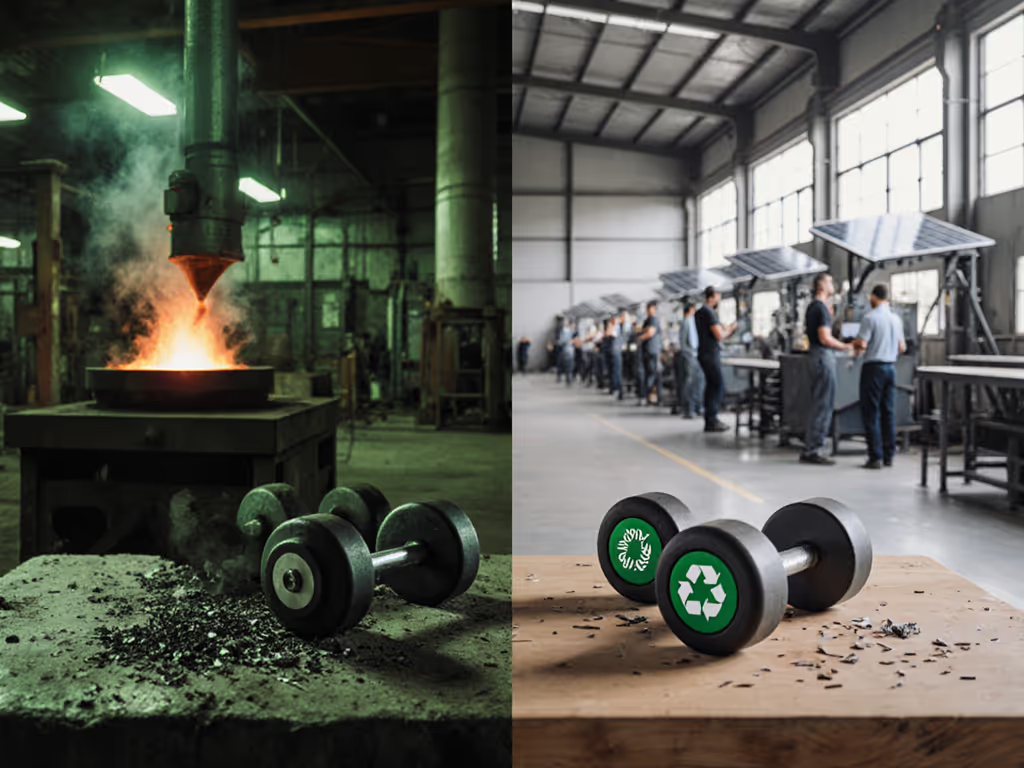
Eco-friendly dumbbell manufacturing and sustainable production processes matter more than most lifters realize, not just for the planet, but for your training consistency and the spaces you share with others. How dumbbells are made directly affects durability, noise, grip feel, and whether they're safe to use in your home or apartment night after night. If noise in shared spaces is a key factor, see our apartment noise comparison to match eco-friendly builds with quiet performance. This FAQ explores the environmental footprint of different manufacturing routes, compares material lifecycles, and helps you understand what "sustainable" actually means when you're choosing between options.
What Makes One Dumbbell Manufacturing Process More Eco-Friendly Than Another?
The manufacturing process impacts the environment at every stage: material sourcing, production energy, chemical use, shipping weight, and end-of-life recyclability.[1] Two dumbbells of similar weight can have vastly different carbon footprints depending on how they're made.
Urethane-coated dumbbells, for instance, typically use thermoplastic polyurethane (TPU) or polyurethane (CPU), materials that require more controlled manufacturing but offer low-VOC, low-odor properties[1] and don't off-gas in shared spaces. This manufacturing precision demands higher energy inputs upfront but results in durability that outlasts cheaper alternatives, meaning fewer replacements over time.
Cast-iron or steel cores with certified rubber coatings represent a middle path. Cast iron production is energy-intensive, but recycled steel reduces extraction impact[1]. The coating process (whether dipping, spraying, or molding) determines whether volatile organic compounds (VOCs) and phthalates escape into your home or the environment.[1] Many brands now use bonded recycled rubber processed under controlled conditions, which is more sustainable than virgin rubber but still requires quality assurance to prevent odor emissions.
Comfort that keeps you consistent is performance in disguise, and consistency means fewer replacements.
The hidden cost: cheap dumbbells with poor coating adhesion shed material faster, meaning your "bargain" set ends up in a landfill within a few years, replacing the eco-gain you thought you'd achieved.
How Do Raw Material Choices Affect the Lifecycle Environmental Impact?
The resource usage analysis begins before casting or molding starts.
Virgin rubber and newly synthesized urethane require extraction and petrochemical processing, which carries a higher initial carbon footprint.[5] However, virgin materials often exhibit superior durability and don't harbor the impurities that cause odor in recycled alternatives.
Recycled rubber diverts waste from landfills and requires less new petrochemical processing[1], but not all recycled rubber is created equal. Processing method (whether it's shredded into powder and re-vulcanized or merely bonded as pellets) determines odor, longevity, and whether heavy metals from tire sources remain trapped in the material.[1] A reputable manufacturer tests for VOCs and heavy-metal screening as part of REACH and RoHS compliance.[1]
Cast iron or steel cores can be sourced from recycled material or virgin ore. Recycled steel melting requires roughly 75% less energy than primary steel production, a fact confirmed by industry reports. However, virgin steel offers purity that recycled stock cannot guarantee in applications where precise weight tolerance matters for progression tracking.
The choice between virgin and recycled isn't simply "greener vs. not." A dumbbell made from 100% recycled rubber that smells and rattles will be abandoned and replaced, negating its ecological benefit. A durable virgin-urethane dumbbell used consistently for 10+ years carries less true impact per rep lifted.
What Do Different Coating Processes Contribute to Environmental Impact?
The coating stage is where ethical manufacturing practices become measurable.
Dipping and molding urethane coatings involve spraying or immersing dumbbells in polyurethane resin. Low-VOC formulas are available but cost more; budget manufacturers use older, volatile formulations that off-gas into your home and release harmful compounds into the air during production.[1] This choice saves a few dollars per unit but externalizes the environmental cost onto workers and consumers.
Rubber bonding requires adhesion agents and curing processes. Controlled curing in regulated facilities (with proper ventilation and chemical recovery systems) produces cleaner output but requires capital investment. Uncontrolled bonding in less regulated factories burns off VOCs into the atmosphere and can leave residual phthalates in the material.[1]
Bare metal finishes (cast iron or stainless steel with no coating) eliminate chemical coatings entirely, reducing manufacturing emissions and avoiding any risk of off-gassing.[1] The trade-off: bare metal is louder when dropped and corrodes without maintenance. For shared living spaces where noise matters, this option often conflicts with your training environment.
How Does Adjustable vs. Fixed-Weight Manufacturing Differ Environmentally?
Adjustable dumbbells (with removable plates, locking systems, and precision-engineered mechanisms) require significantly more intricate manufacturing processes than simple fixed weights.[2] The environmental cost is front-loaded: more components, tighter tolerances, additional assembly steps, and higher energy use.
However, one adjustable set replaces what might be 8-12 fixed dumbbells in a typical home gym. Over a decade, purchasing multiple fixed dumbbells likely consumes more total resources, packaging, and shipping emissions than a single high-quality adjustable system. The lifecycle advantage depends on durability: if your adjustable set locks securely without wobble, and replaceable plates and mechanisms remain available, the eco-impact over time is lower.
Fixed-weight dumbbells shine in high-volume commercial settings where identical weights are needed simultaneously. For home use (your likely context), adjustable systems usually win the carbon footprint comparison when durability is high. For a broader look at tradeoffs beyond manufacturing, read our adjustable vs fixed comparison with real-world noise and space data.
What Role Does Manufacturing Location and Supply Chain Play?
A dumbbell manufactured in a facility powered by renewable energy, using water recycling systems and zero-waste protocols, carries a markedly different footprint than identical-looking weight made in an unregulated factory far away, then shipped by air freight.
Transparency matters. Leading manufacturers now disclose supplier information and conduct material audits.[1] Facilities that prioritize shot-blasting surface cleaning before coating (for adhesion) versus using harsh chemical pre-treatments reduce both environmental damage and worker exposure. Automated machinery in state-of-the-art plants (such as those introduced in 2024 with third-generation production systems[2]) improves precision while reducing waste and rework.
Shipping weight is often overlooked: urethane-coated dumbbells weigh slightly less than equivalent rubber models, lowering transport emissions. Packaging matters too: recycled cardboard and minimal plastic inserts versus bulky foam and virgin plastics.[1]
Which Brands Demonstrate Genuine Commitment to Sustainable Production?
Authentic sustainability shows in specifics, not marketing claims alone.
Rogue Fitness offers metal dumbbells and high-grade urethane models, emphasizing construction quality that lasts.[1] Decathlon's Domyos line has increased PVC-free offerings, aligning with EU environmental regulations.[1] Artbell recently introduced a CPU dumbbell line with REACH and RoHS compliance, FSC-certified packaging, and disclosed use of recycled steel cores.[1] Companies with published annual sustainability reports, third-party material testing, and take-back/recycling programs show commitment beyond the product label.
When evaluating a brand's claims, ask:
- Are VOC and heavy-metal test results publicly available?
- Do they disclose their manufacturing facilities and energy sources?
- Is packaging made from recycled or recyclable materials?
- Are replacement parts available, extending product life?
- Is there a take-back or recycling program?
How Should You Weigh Environmental Impact Against Durability and Fit for Your Training Environment?
This is where body-aware decision-making enters. A sustainable dumbbell that's loud, causes grip tension, or wobbles during supersets will sit unused (the worst environmental outcome). A durable, quiet set you reach for at 5 a.m. or 9 p.m. without waking anyone, with a knurl geometry that feels precise and doesn't cause hotspots, gets used consistently. Consistency is performance, and performance drives longevity.
Consider:
-
Noise and vibration: Low-odor urethane or bonded rubber typically quiets impact better than bare metal.[1][3] If your floor is wood or you share walls, durability paired with noise-dampening coating is eco-wise, a set you actually use beats silent guilt.
-
Grip geometry: A well-cut knurl on a slightly thicker handle reduces grip tension and compensates for the lighter loads common in early morning or quiet hours. High grip calm and body awareness during controlled reps trump ego lifting that stalls your routine.
-
Weight increments: Eco-impact multiplies if you outgrow a set in two years. Choose adjustable systems with 2.5-5 lb steps and sufficient top-end weight (70-100+ lb per hand) to permit years of progression.[1][2] Compare models by smallest weight jumps in our 2.5 lb micro-weight guide to avoid premature upgrades.
-
Material purity: If you're sensitive to odor or have respiratory concerns, low-VOC urethane or bare metal justify their higher upfront cost. Off-gassing into a small apartment creates environmental harm on your side of the wall too.
What Do Independent Tests Reveal About Durability Across Manufacturing Methods?
Long-term studies on dumbbell durability are sparse, but industry data shows clear patterns. Urethane dumbbells resist cracking and fading even under outdoor exposure and heavy use, with minimal maintenance required.[3] Rubber dumbbells, while durable, require more care (especially hex models where crevices trap dirt) and may require periodic inspection for wear.[3] Cast iron with high-quality coating lasts decades if corrosion is managed; bare cast iron corrodes over time in humid or salty environments.
A 5-year commercial warranty (offered by brands using precision assembly and patented locking mechanisms[3]) signals confidence in manufacturing. See which brands actually deliver in our warranty reviews before you buy. Dumbbells with replaceable handles, plates, and locking components extend usable life and reduce landfill waste more effectively than sealed, irreparable designs.
Final Insights: Choosing for Impact and Consistency
Eco-friendly dumbbell manufacturing isn't a single choice, it's a hierarchy of decisions weighted toward durability, your specific environment, and honest use patterns. For a purchase-first perspective, our sustainable dumbbell buying guide distills materials, durability, and certifications into an actionable checklist. A slightly more expensive urethane set made in a facility powered by renewables, with full VOC disclosure, a warranty, and available replacement parts, likely carries lower true impact than a cheap option you replace in three years.
Your training consistency (the gentle, precise routine you maintain without disturbing neighbors, without grip issues, without safety worries) is the strongest environmental argument. Gear that calms your nervous system and fits your space gets used; gear that doesn't becomes clutter.
Research the specific materials, request test data, verify manufacturing transparency, and ask whether the brand stands behind durability. The most sustainable dumbbell is the one you'll actually lift for years.
Explore Further
Dig deeper by reviewing third-party VOC test results and safety certifications (REACH, RoHS, Prop-65) before purchasing. Request material disclosure sheets from manufacturers and compare coating processes, not just product photos. If noise and grip comfort are central to your decision, seek out user reviews specifically focused on early-morning or late-evening use in apartments. Consider joining online communities where lifters in shared spaces discuss long-term durability of specific models; real-world data often outpaces marketing claims. Finally, if environmental impact matters deeply, prioritize brands with published sustainability reports and take-back programs, voting with your purchase reinforces market demand for genuine eco-friendly innovation.
Related Articles