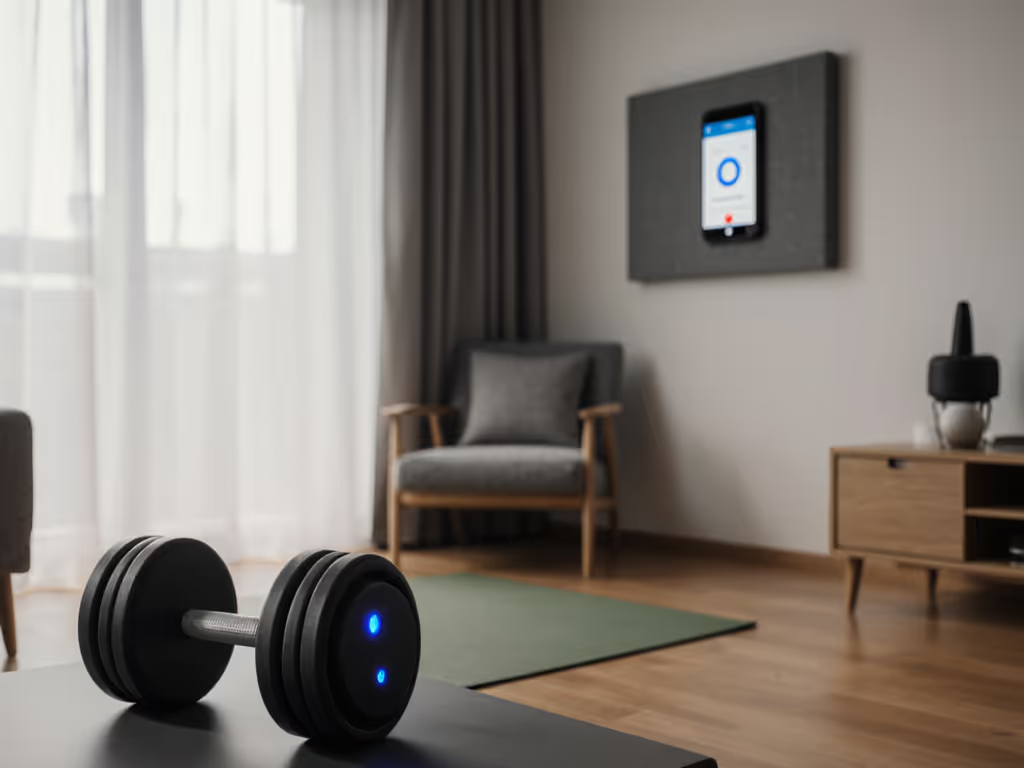
High-Rep Adjustable Dumbbells: Speed vs Durability
By Mateo Alvarez • 2nd May

When you've got a 45-minute window before the house wakes up, high-rep training with adjustable dumbbells can't waste time on transitions. But fast-change systems carry their own risk: stripped gears, cracked polymer, handles that rattle after a few hundred sessions. The question isn't which category wins universally; it's which trade-offs align with your training style and environment. A clear-eyed comparison shows that speed and durability rarely coexist equally. Understanding where each design excels (and where it breaks down) saves you from buyer's remorse and keeps your sessions consistent.
This isn't theory. When my son arrived, training meant squeezing workouts into nap windows. I learned quickly that small frictions decide whether today's workout happens or doesn't. A system taking 90 seconds to swap weights on a four-exercise superset isn't just slower; it's a decision point where the session collapses. That's when I started timing mechanisms, testing locking stability, and measuring the cognitive load of each adjustment. What I found was that speed and durability are linked through mechanism design choice, not conflicting laws of physics. The right choice depends on your repetition volume, session intensity, and how you define "lasting."
1. Mechanism Speed: The Renewable Resource vs. the Fixed Trade-Off
Fast-change systems (pin-and-tray, dial-lock, lever-release) advertise sub-5-second transitions. Spin-lock and plate-loading systems promise durability through simplicity but add 30 to 60 seconds per weight change. The analytics here matter: if you perform 12 supersets weekly with an average of 3 weight changes per superset, you're talking 36 transitions. At 3 seconds each, that's 108 seconds of aggregate transition time; at 45 seconds each, it's 27 minutes monthly. For mechanism-by-mechanism timing and user experience data, see our dial vs selector pin noise and speed test.
The real trade-off isn't speed alone: it's the cognitive friction of the system. Dial locks require remembering weight positions. Pin systems demand finding the correct tray slot in real time. Spin-locks require hand-eye coordination when fatigued. Each adds decision-making overhead. The two-minute rule applies here: if your setup or transition can't be executed confidently in under two minutes total, you'll subconsciously avoid it when energy is low.
2. Durability Signatures: What Actually Breaks First
Mechanism speed and durability diverge most clearly at the failure point. Fast-change systems rely on precision tolerances: polymer locking tabs, steel leaf springs, and indexed trays that must align perfectly. A single drop or misalignment and play develops. Spin-locks, by contrast, fail less frequently because they're mechanical simplicity: a threaded collar, a rubber grip, gravity. For engineering data on component wear under heavy loading, check our mechanism durability analysis. When they fail, replacement parts are cheap and universal.
High-rep use (16+ sets, 8+ reps per set weekly) stresses locking mechanisms unevenly. If you're chasing light weight durability at high repetition counts, fast-change systems see accelerated wear on polymer components and spring-loaded catches. The repeated micro-impacts of locking and unlocking, compounded over thousands of cycles, create fatigue. Spin-locks, conversely, experience less component stress because the mechanism sees fewer cycles (you're not engaging and disengaging a catch hundreds of times per session).
3. Repetition Comfort Analysis: Handle Feel Over High-Volume Sessions
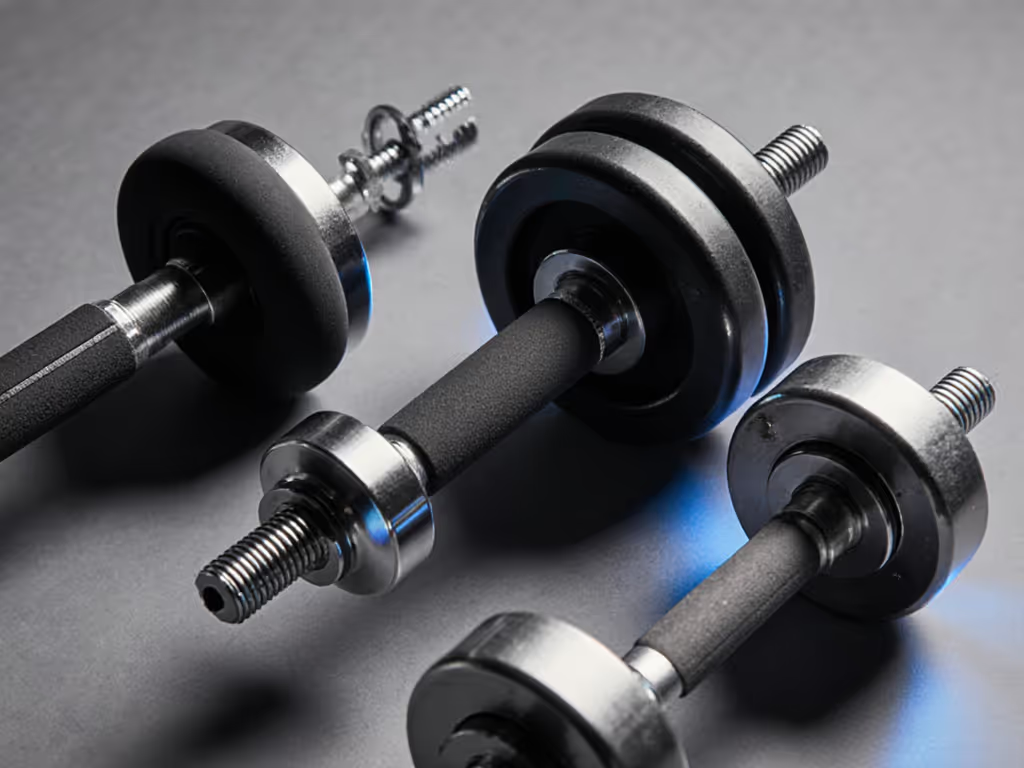
Repetition comfort analysis isn't glamorous, but it predicts whether your hands and wrists survive a 20-rep set. Fast-change systems often feature shorter, narrower handles because the weight-adjustment hardware (pins, dials, or tray mounts) occupies space. Spin-lock systems can integrate the collar into a longer handle without adding bulk. For long session handle evaluation, this matters.
Across high-rep movements (dumbbell rows, curls, farmer carries), a too-short handle forces a narrower grip, increasing forearm fatigue and knurl pressure hotspots. Longer handles (6 to 7 inches) distribute load more naturally. At high repetitions (15+ per arm), handle length directly predicts whether you complete your set or stop early due to grip fatigue, not muscular failure. A 0.5-inch handle difference might save 2 to 3 reps per set on your 8th or 9th heavy set.
4. Fatigue Resistance Testing: Mechanism Reliability Under Cumulative Load
Laboratory fatigue testing (when manufacturers disclose it) reveals that fast-change systems begin showing play after 5,000 to 8,000 lock/unlock cycles. That's roughly 6 to 12 months of 3x-weekly high-rep training. Spin-lock systems, when tested under the same load, often exceed 20,000 cycles before measurable slack appears.
However, fatigue resistance testing also depends on user handling. Forcing a pin into an unaligned tray, or cross-threading a spin-collar when fatigued, accelerates failure dramatically. Mechanisms designed with forgiving tolerances (slight play built into catches, wider tray slots) resist user error better. This is where industrial design beats raw material choice. A steel spin-collar with poor slot tolerances will strip faster than a polymer-and-steel hybrid pin system with generous engagement margins.
5. Noise and Vibration: The Hidden Durability Tax
Speed isn't the only advantage of fast-change systems; they're typically quieter. Pin-based mechanisms produce a single, muted click. Dial-locks generate a soft whisper of turning. Spin-locks, by contrast, often rattle against the dumbbell head and create a metallic shhhnk that travels through floors and walls. If noise control is critical in apartments, compare mechanisms in our adjustable dumbbell noise level guide.
Noise, however, is a durability risk. Repeated vibration and impact accelerate micro-fractures in polymer components and loosen fasteners. A fast-change system that's naturally quieter suffers less vibration-induced stress, potentially offsetting its higher precision demands. A loud spin-collar system experiences greater cumulative stress, shortening lifespan independent of usage volume.
6. Progressive Overload and Weight-Increment Integrity
Both system types can offer 2.5 to 5 lb increments, but consistency matters. If you rely on micro-loading, compare smallest step sizes in our 2.5 lb plate-loaded micro-weight comparison. Fast-change systems rely on precisely manufactured trays or indexed dials; if even one slot is slightly worn or the pin bends, you'll notice misalignment immediately. Spin-lock systems rely on collar tightness; a loose collar means the dumbbell head wobbles, creating safety and performance anxiety.
For endurance training (high-rep protocols), wobble is worse than speed friction. An unstable dumbbell head ruins your set by forcing compensation patterns and grip tension. A 0.5-second slower weight change is preferable to a 30-set session compromised by instability.
7. Seasonal Reliability and Climate Sensitivity
Adjustable dumbbells stored in apartments and basements experience temperature and humidity fluctuations. Polymer shrinks in cold; metal expands or contracts. Fast-change systems with multiple materials (aluminum, steel, polymer) can develop inter-material play when temperature swings 40°F across seasons. Spin-lock systems, being mostly metal, remain stable.
If your training window is early morning in winter or late evening in humid basements, thermal stability predicts mechanism reliability more accurately than brand reputation. This is rarely discussed but explains real-world durability complaints that lab testing doesn't capture.
8. Maintenance Burden and Replacement Parts Accessibility
Fast-change systems often require periodic cleaning to maintain alignment: dust in tray slots or pin channels causes binding. For step-by-step upkeep that extends lifespan and keeps mechanisms quiet, follow our adjustable dumbbell maintenance guide. Spin-lock systems are sealed; dirt doesn't affect function, though a rusty collar corrodes. Parts availability differs sharply: pin-and-tray mechanisms are proprietary (replacement trays cost $50 to 100+); spin-collars are universal ($15 to 30).
If durability means maintainability, spin-locks win. If durability means "never needs maintenance," fast-change systems win if kept clean. For apartment lifters juggling work and family, a system that works reliably for five years with zero maintenance beats one requiring annual servicing.
9. The Cumulative Cost of Speed: When Fast Becomes Expensive
Fast-change systems cost 20 to 40% more upfront. Over 5 years, if you need to replace worn components (polymer inserts, springs, pins), the total ownership cost narrows. A $300 spin-lock set might cost $30 in replacement collars over five years; a $400 fast-change set might cost $150 (replacement pin kit, new tray section). The true durability advantage exists only if replacement parts are available and cheap.
For budget-conscious apartment dwellers facing a choice, fast-change systems justify their cost only if you're confident in 3+ years of consistent high-volume training. If you're experimenting or uncertain about long-term commitment, spin-locks' lower cost and simpler maintenance cut buyer's remorse risk.
10. Your Mechanism Choice: A Decision Framework
Choosing between speed and durability requires honest answers to three questions:
Do you prioritize session flow? If supersets, EMOMs, or 15+ rep sets are your standard, fast-change mechanisms under 5 seconds are worth the durability trade-off. You'll complete more quality sets, and consistency beats perfect durability.
Is your training volume sustainable long-term? High-rep training (15 to 25 reps, 3 to 4x weekly) stresses fast-change mechanisms harder. If your actual volume is moderate (8 to 12 reps, 2x weekly), durability differences shrink. Match the system to realistic volume, not aspirational intensity.
How much maintenance friction can you absorb? Fast-change systems demand environmental care (dust control, dry storage). Spin-locks tolerate neglect better. Your willingness to wipe trays monthly or replace worn parts determines true durability.
Your Next Step: Build the Test Yourself
Before committing, request a trial or borrow a set for one week. Time three weight transitions with each system (not in isolation, but mid-superset when fatigued). Measure the difference. If it's less than 5 seconds, mechanism speed isn't your real barrier; setup friction or decision-making is. If it's more than 10 seconds, fast-change systems will meaningfully improve session quality.
Next, inspect the handles and locking mechanisms up close. Run your thumb over the knurl; grip them at different hand positions. Long sessions reveal handle geometry mismatches that feel fine in a 30-second demo. Finally, research replacement part costs and availability for your shortlisted models (not as an afterthought, but as a durability guarantee). The system that wins is the one you'll actually use consistently, every week, for years. Small frictions decide whether today's workout happens or doesn't; your mechanism choice removes one or shifts it elsewhere. Choose deliberately.
Related Articles