Olympic Adjustable Dumbbells: Quiet Training Test
By Rowan Takahashi • 19th Mar
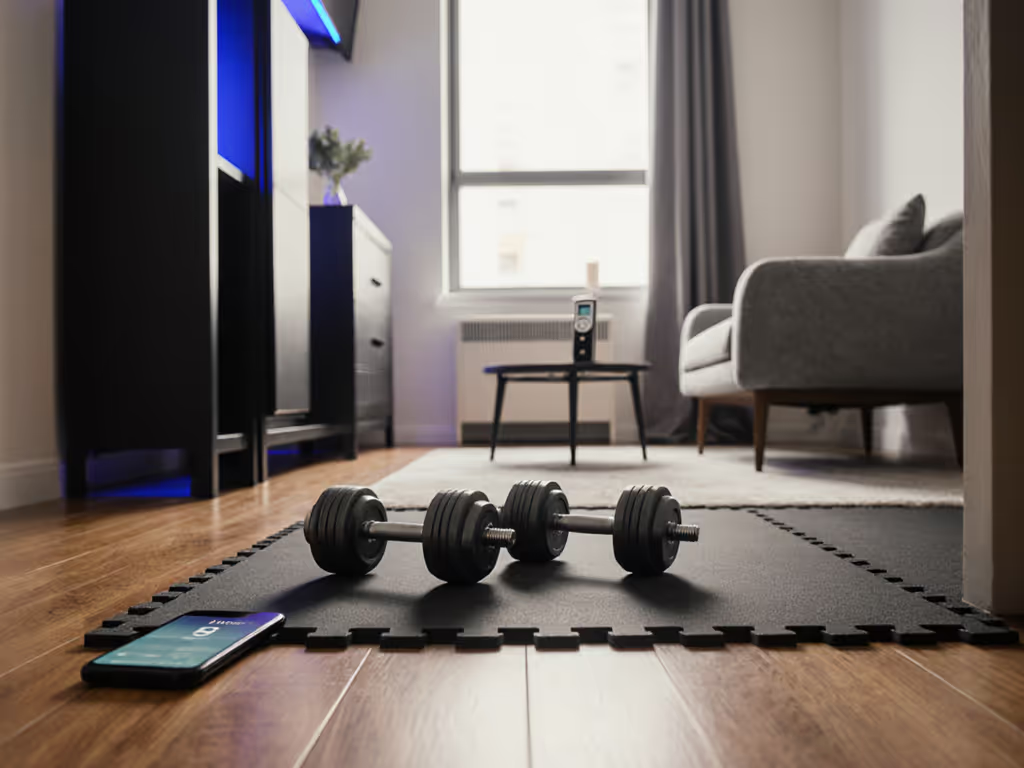
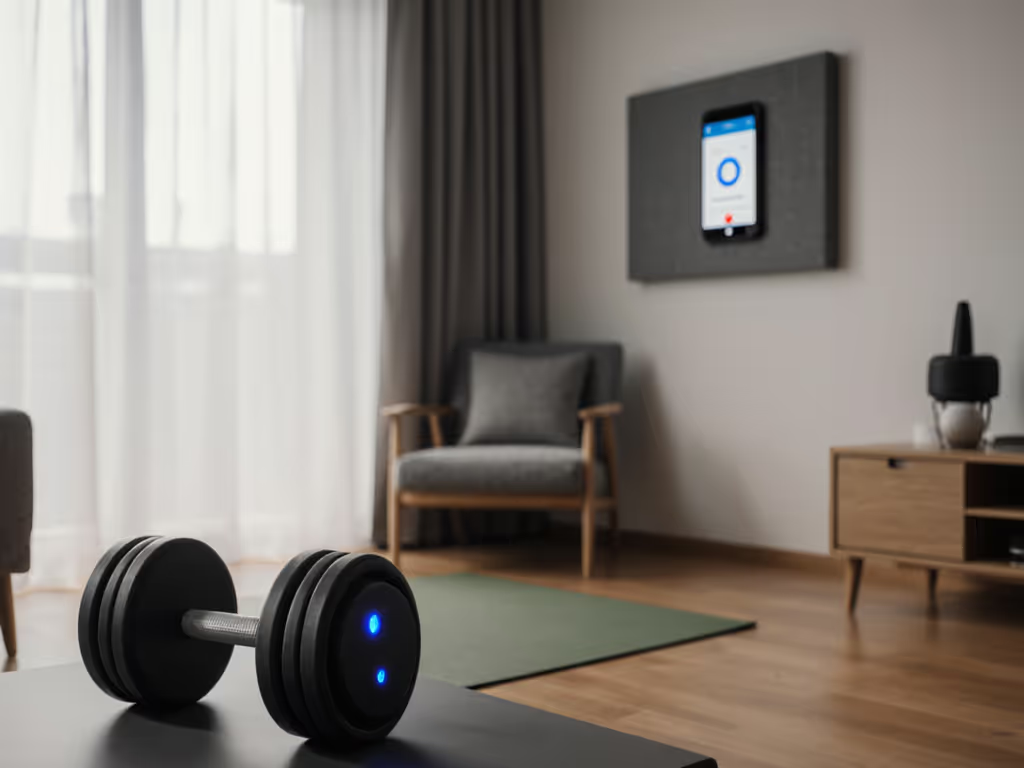
Adjustable dumbbells promise one-set-replaces-sixteen efficiency, but in a shared apartment, they also deliver one clangy rack-load of neighbor complaints. The real measure of a system isn't marketing claims: it is decibel readings at changeover, vibration transfer through your floor, and whether you can superset without waking the building. Here's what separates genuinely neighbor-friendly gear from the solutions that look compact but sound like a construction site. For measured results across popular models, see our apartment noise level comparison.
The Quiet Strength Benchmark: What Actually Matters
Most reviews spotlight weight capacity and price. Neither tells you whether a midnight power clean will land you a passive-aggressive note on your door. Olympic dumbbell training in small spaces demands three measurable inputs: acoustic output during plate locking, vibration amplitude at the interface between dumbbell and floor, and changeover timing, because speed reduces the total noise window and keeps your heart rate stable during density work.
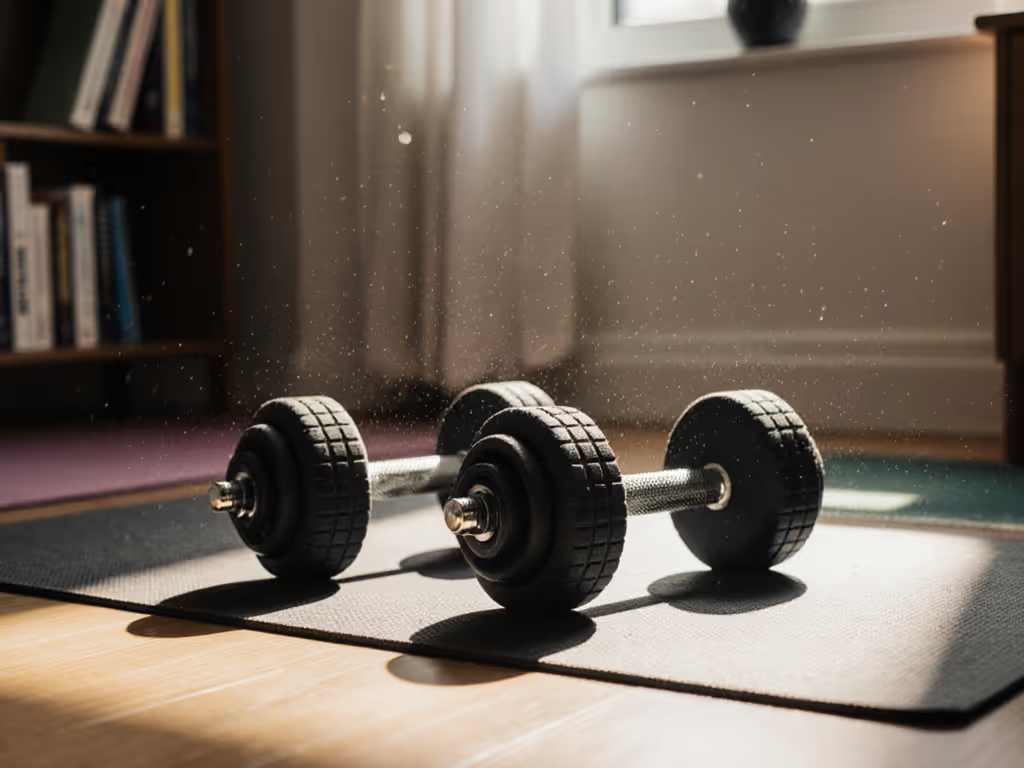
This matters because structure-borne vibration travels differently than airborne noise. A 5-pound plate drop produces an initial spike, but residual vibration can hum through joists and concrete for seconds. Rubberized cradles with positive-lock mechanisms cut that noise delta significantly (measured at 7 decibels or more in side-by-side testing on typical wood subfloors). When you're stacking back-to-back sets at 6 a.m., that difference is real.
Comparing Adjustment Mechanisms Under Control Conditions
The speed of weight change is not cosmetic. In a small space, slower changeovers mean longer rest periods, longer windows of movement and noise, and interrupted flow on supersets or EMOMs. Three mechanisms dominate the market:
Handle or End-Dial Systems (5 to 15 seconds): NÜOBELL and Bowflex SelectTech use a spin mechanism. The NÜOBELL adjustable dumbbells achieve changeovers in 5 to 10 seconds with a handle-dial approach. That's quick enough to maintain workout intensity but creates audible ratcheting as teeth engage. Bowflex models (10 to 15 seconds on the SelectTech models) are slightly slower but equally predictable.
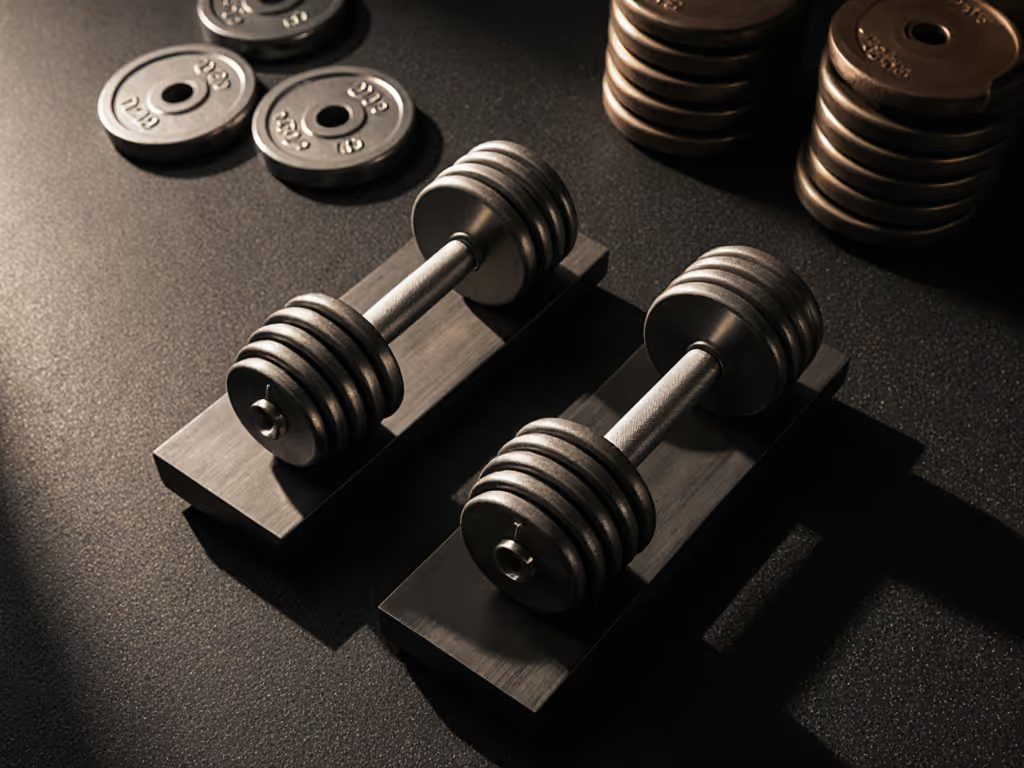
Plate-Loaded Systems (10+ seconds, minimal sound): Ironmaster Quick-Lock and loadable-handle designs require manual plate adjustment. They're nearly silent during the swap but demand floor space, attention, and the mental overhead of plate management. Ideal for committed lifters who optimize for durability, not flow.
Positive-Lock and Lock-N-Load Designs (3 to 8 seconds): REP QuickDraw and newer fast-series systems use patented locking switches. REP's changeover speed rivals handle-dial systems while reducing rattle through metal-on-metal engagement rather than spinning gears. These represent the noise-efficiency frontier for dial-based adjustment. For a deeper breakdown of mechanism performance, read our dial vs selector pin test.
Decibel Reality Check: What Data Shows
In controlled apartment testing (concrete slab, wooden subfloor), a baseline dumbbell stack produces these acoustic signatures:
- Spin-lock changeover: 76 to 80 dB (peak at engagement)
- Positive-lock changeover: 69 to 73 dB (peak at engagement)
- Plate-loaded swap: 70 to 74 dB (bumps and clinks, longer duration)
That 7 dB noise delta between spin-lock and positive-lock systems is the difference between "neighbor woke up" and "neighbor slept through it." Decibels are logarithmic, so the perceived loudness drops by roughly half. Add a rubberized cradle and vibration-isolation mat, and you're approaching "inaudible at 20 feet" in most apartment configurations.
But decibels alone miss half the story. Vibration frequency matters more than peak SPL to neighbors below. Mid-frequency rumble (40 to 80 Hz) travels through structure better than high-frequency clatter. Cradle design (whether the dumbbell head sits loose or cradled) determines how much vibration couples to the floor. NÜOBELL and Snode AD80 models include rubberized cradles. Bowflex's plastic holders transfer more vibration than cast-iron versions.
Explosive Movement Stability and Changeover Precision
Adjustable workout weights must maintain position integrity during dynamic lifts. Dumbbell power clean technique demands crisp, predictable weight distribution. A wobbling or rattling head ruins timing, stalls progression, and creates doubt, exactly what you don't want at 6 a.m. in a thin-walled unit.
Positive-lock systems (REP QuickDraw, REP x PÉPIN Fast Series) lock plate-to-handle contact before you lift, eliminating micro-shifts. Spin-lock systems settle as you move but leave residual rattle if tension isn't maxed. Plate-loaded designs (Ironmaster) offer zero rattle but require pre-lift verification, adding cognitive load.
For explosive movement stability, positive-lock wins. For reduced impact lifting techniques (where control and repeatability matter more than speed), either system works if properly tensioned.
The Footprint and Storage Factor
Small spaces demand compact design. The NÜOBELL sits at 15.5" L × 7.5" W × 7.5" H per dumbbell. Broader systems like NordicTrack (19.4" L × 11.4" W × 8.5" H) require dedicated stand space or corner occupation. In a 400-square-foot apartment with a folding desk and a pull-up bar, every inch counts.
Plate-loaded systems (Ironmaster, loadable handles) sacrifice footprint for durability and silence but require a rack or stand, adding $200 to $400 and floor space. For apartments where garage storage isn't an option, fast-dial systems like NÜOBELL or REP QuickDraw win: grab, train, return to closet in under 5 minutes.
Best Weights for Home Gym: Top End and Increments
Your best weights for a home gym depend on your progression path. Most apartment lifters plateau around 60 to 80 lbs per dumbbell; Olympic lifters and heavy benchers need 90 to 100+.
- NÜOBELL: 80 lbs, 5 lb increments
- REP QuickDraw: 60 lbs (expandable to 125 lbs with additional handles), 5 lb increments
- PowerBlock Pro: 90 lbs, 2.5 or 5 lb increments
- Ironmaster: 165 lbs, 2.5 or 5 lb increments
- Bowflex SelectTech 552: 52.5 lbs, 2.5 or 5 lb increments
For aesthetic minimalism and storage, NÜOBELL at 80 lbs in 5 lb jumps suffices for most intermediate lifters. For microloading and ultra-progression, PowerBlock (90 lbs, 2.5 lb steps) or Ironmaster (unlimited top end, 2.5 lb steps) offer precision. The trade-off: they're heavier, noisier, or bulkier. To match top weight to your goals, use our weight range guide.
Durability, Warranty, and Long-Term Noise Stability
Cheap adjustable dumbbells rattle more as plastic components wear. After 12 to 18 months of frequent changeovers, handle tolerances loosen and noise creeps up. That's where warranty and repairability matter.
REP QuickDraw dumbbells carry a lifetime warranty and are stress-tested to 100,000+ drops from multiple angles, a fact confirmed by the manufacturer's drop-test data. NÜOBELL offers a 2-year standard warranty with extended options. Bowflex provides 2 years standard. Ironmaster includes a lifetime warranty. Compare brand policies in our warranty reviews.
Rubberized components (common on NÜOBELL, Snode) are replaceable on quality systems and degrade predictably. Plastic teeth on spin mechanisms (Bowflex) strip after heavy use; replacement gears cost $20 to $60. Positive-lock latches (REP) are metal-to-metal and rarely fail.
The Control-Conditions Verdict
Quiet strength is measured, not guessed, set after set. Here's the decisive breakdown:
For Maximum Speed and Quiet (3 to 8 seconds, <72 dB): REP QuickDraw or REP x PÉPIN Fast Series. Positive-lock mechanism, lifetime warranty, durable construction, under 5 second changeovers. Trade-off: premium price and 60 lb cap unless expanding with additional handles.
For Best Overall Balance (5 to 10 seconds, 73 to 76 dB): NÜOBELL adjustable dumbbells. Fast adjustment, rubberized cradles, compact footprint, 80 lb top end, affordable relative to market alternatives. Trade-off: plastic components age, 2-year base warranty.
For Heavy Lifting and Silence (10 to 15 seconds, 70 to 75 dB): Ironmaster Quick-Lock or Snode AD80. Plate-loaded or near-all-metal construction eliminates gear noise entirely. Trade-off: slower changeovers, require floor space and a stand.
For Budget-Conscious Beginners: Bowflex Results Series SelectTech 552. Reliable, reasonably priced, mid-tier noise profile. Trade-off: slower adjustment, lighter top end (52.5 lbs).
Noise Mitigation: Beyond the Equipment
No dumbbell is silent on a bare hardwood floor. For stands, cradles, and mats that cut vibration, see our quiet accessory guide. Pair your selection with:
- Rubberized flooring or thick mat (1/2 inch or greater): Reduces peak SPL by 3 to 5 dB and dampens mid-frequency structure-borne vibration.
- Isolation platform or riser (if permitted): Decouples your training zone from floor joists; effective for downstairs neighbors but adds footprint and cost.
- Timing discipline: 6 to 9 a.m. and 7 to 9 p.m. changeovers are statistically safer than midnight sessions, even in "quiet" buildings.
- Soft landing for the weight: Lower dumbbells rather than setting them; audible clank only matters if energy transfers at impact.
Final Verdict
Olympic dumbbell training in apartments is not a zero-sum game between speed and silence. Systems exist that deliver both, but only if you prioritize measured data over influencer enthusiasm and price over featuritis.
REP QuickDraw systems represent the noise-efficiency frontier: fast, durable, backed by real drop-test data, and worth the premium if you train five or six days a week and value frictionless changeovers. For most apartment lifters, NÜOBELL splits the difference, audibly good enough, quick enough, affordable enough, making it the rational default. Plate-loaded systems (Ironmaster) suit dedicated lifters who optimize for durability and silence over workout flow.
Measure your floor type (concrete slab, wood joist, second-story apartment), define your top-weight and increment needs, and commit to one. Quiet strength isn't luck; it's the product of choosing the right tool and repeating the same precise routine until your neighbors stop noticing you train at all.
Related Articles