
Desk Dumbbell Exercises: Quiet Tech Neck Fix
By Mateo Alvarez • 25th Oct
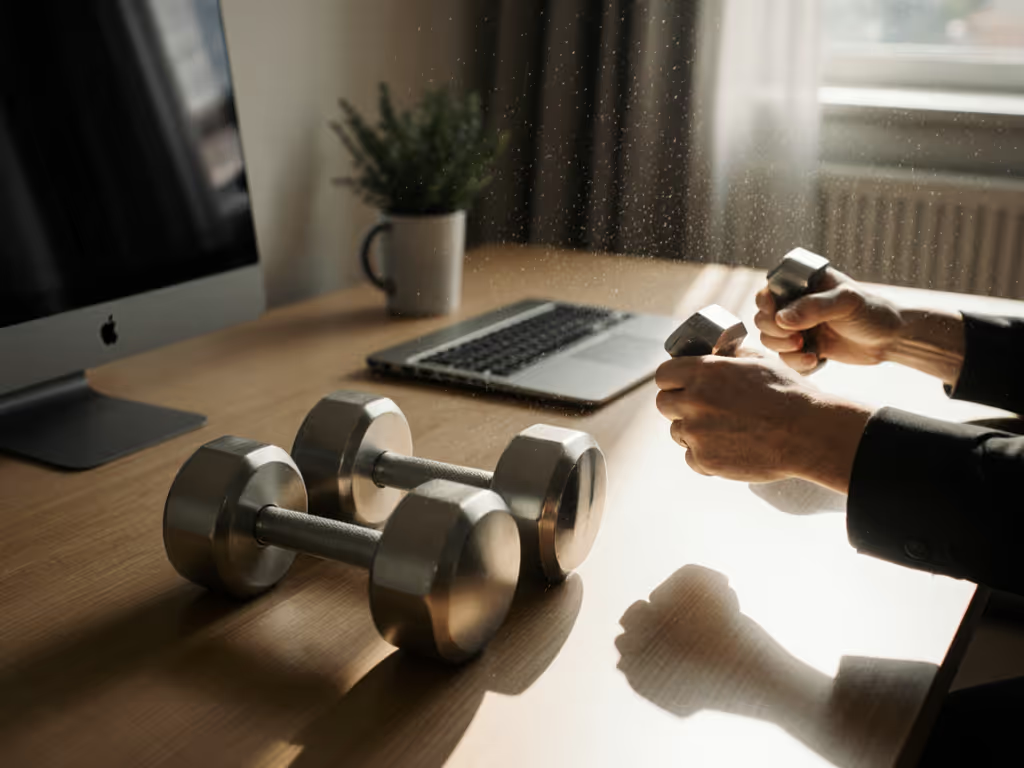
If you're a desk worker drowning in screen hours, desk worker dumbbell exercises could be your secret weapon against tech neck correction. Forward head posture isn't just awkward (it's a silent strain on your spine) from hours spent bent over laptops and phones. But what if your solution could happen between work blocks in your living room, without waking sleeping kids or annoying neighbors? For model picks that stay quiet in small spaces, see our apartment-safe noise comparison. That's where frictionless, space-efficient dumbbell routines shine. Small frictions decide whether today's workout happens or doesn't.
Why Dumbbells Beat Stretching Alone for Tech Neck
Most "text neck" fixes focus only on stretches. But weak mid-back muscles (rhomboids, traps) let your shoulders cave forward. You need strengthening (quietly, sustainably). Standard gym rows or face pulls risk noise complaints in apartments. Instead, prioritize exercises with minimal floor vibration, slow eccentric phases, and equipment that won't disrupt your peace. This is where your toolkit matters: micro-adjustable dumbbells with secure locks (like REP's Quickdraw system with its Lock-N-Load steel switches) eliminate wobble and change weights in under 5 seconds. No clanking plates. No nerve-wracking spin-locks. Just smooth transitions that fit into a 10-minute window.
Small frictions decide whether today's workout happens or doesn't.
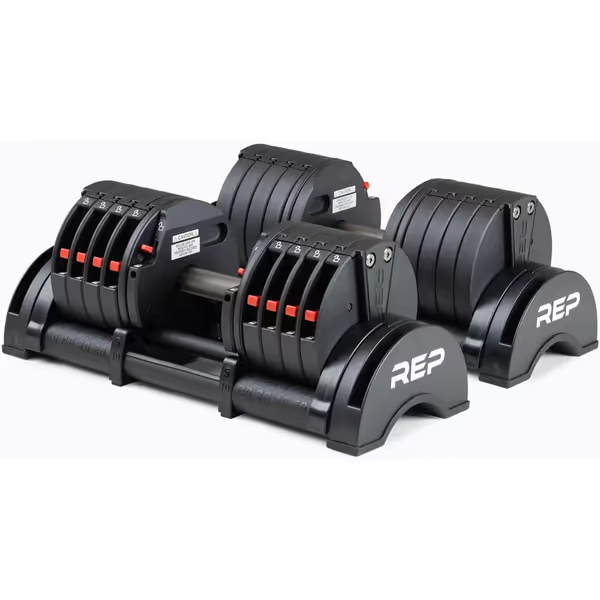
REP Fitness Quickdraw Adjustable Dumbbells
Quiet, durable, and space-saving for efficient home workouts.
$495.99
Weight Range5-50 lbs (2.5lb increments)
Weight Range5-50 lbs (2.5lb increments)
Pros
Rapid, quiet weight changes via steel switches.
Compact footprint ideal for small spaces.
Extreme durability with lifetime warranty.
Cons
Warranty excludes normal wear and tear.
Heavier sets may be bulky for some movements.
Customers find these adjustable dumbbells easy to use, with one noting how convenient it is to switch weights mid-workout. The dumbbells are praised for their solid construction, durability, and great feel, while offering a small footprint that makes them space-efficient. Customers consider them worth their price point and appreciate their quick adjustment capabilities.
Customers find these adjustable dumbbells easy to use, with one noting how convenient it is to switch weights mid-workout. The dumbbells are praised for their solid construction, durability, and great feel, while offering a small footprint that makes them space-efficient. Customers consider them worth their price point and appreciate their quick adjustment capabilities.
Your 8-Minute Quiet Desk Reset Routine
Forget hour-long sessions. Consistency beats perfection, especially when your time window is a nap or coffee break. Do these exercises at your desk (no gym mat needed) with 5-10 lb dumbbells. Move slowly: control = less noise. Rotate through all four exercises once, then repeat based on time left.
1. Seated Dumbbell Rows (Tech Neck's Antidote)
- Why it works: Targets weakened mid-back muscles that pull shoulders back into alignment. Desk slumping lengthens these fibers; rows rebuild them silently.
- How to do it:
- Sit tall at your desk, feet flat. Hold one dumbbell in each hand, palms facing inward.
- Hinge slightly forward at hips (not waist!), keeping spine neutral.
- Pull elbows back toward ribs, squeezing shoulder blades. Crucial: Lower weights slowly over 3 seconds.
- Reps: 10-12 per set. Stop if wrists strain (use a neutral grip, palms facing each other). If wrists are a limiting factor, our wrist-safe handle comparison shows which grips reduce strain.
2. Prone Y-T-W Raises (No Bench Needed)
- Why it works: Restores scapular control without straining the neck. Ideal for reversing rounded shoulders.
- How to do it:
- Lie face-down on your couch/floor, light dumbbells (2.5-5 lbs) in hand.
- For "Y": Arms extended overhead, thumbs up. Lift 2 inches off ground. Hold 2 sec.
- For "T": Arms out to sides, palms forward. Squeeze shoulder blades.
- For "W": Elbows bent 90°, back of hands up. Pull elbows toward hips.
- Reps: 5 holds per position. Keep neck relaxed, chin tucked slightly.
3. Chin Tuck Dumbbell Presses (Dual-Action Fix)
- Why it works: Combines cervical alignment (chin tucks) with shoulder stabilization, killing two birds with one stone.
- How to do it:
- Sit tall, light dumbbell (5-8 lbs) in one hand at shoulder height.
- Perform a chin tuck: glide head straight back (like making a "double chin"). Hold this the whole rep.
- Press dumbbell overhead slowly. Lower with control.
- Reps: 8-10 per side. Skip if pressing strains your neck (focus on chin tucks alone).
4. Desk-Assisted Reverse Flyes (Silent & Effective)
- Why it works: Isolates rhomboids with zero floor impact. Uses your desk for stability.
- How to do it:
- Place elbows on desk edge, upper arms parallel to floor.
- Hold light dumbbells (3-5 lbs), palms down.
- Lift forearms up and back, squeezing shoulder blades. Lower slowly.
- Reps: 12-15. Move only from elbows, no shoulder shrugging.
Designing Frictionless Workflow for Consistency
When my son arrived, I had to time workouts to nap windows. What saved me? Cutting setup friction to near-zero. Here's how to engineer your own quiet success:
- The 20-Second Rule: If changing weights takes longer than making coffee, skip it. Use microplates (like REP's 2.5-lb add-ons) for seamless transitions between exercises. Learn how to use double progression to turn 2.5 lb jumps into smooth, sustainable progress.
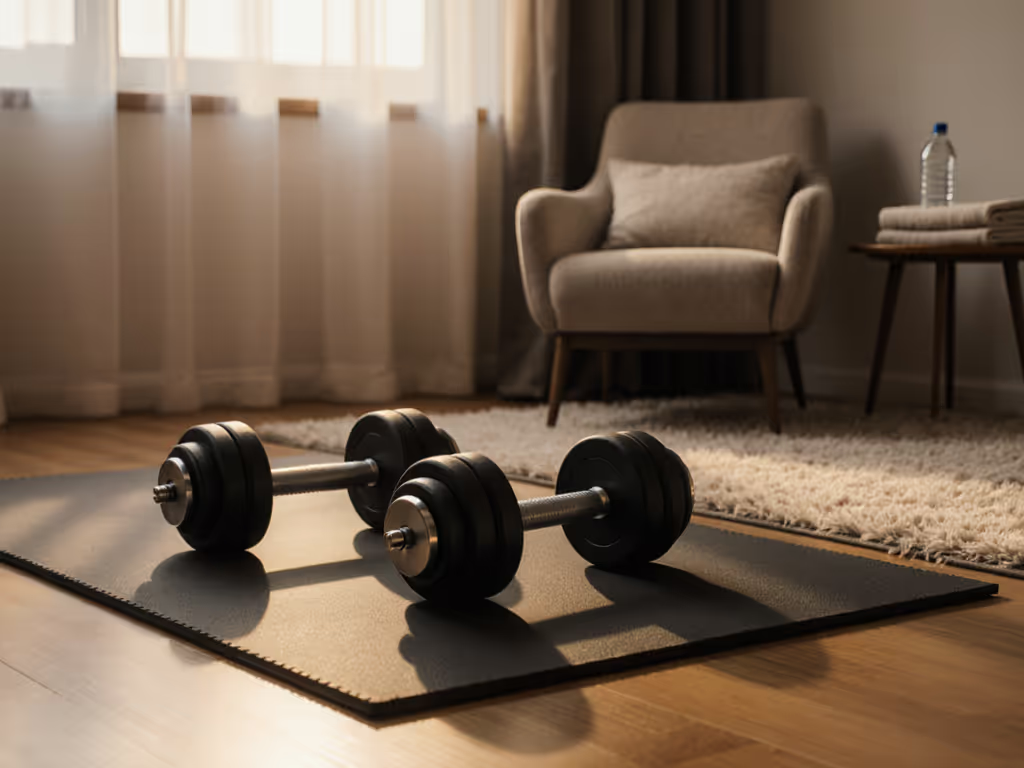
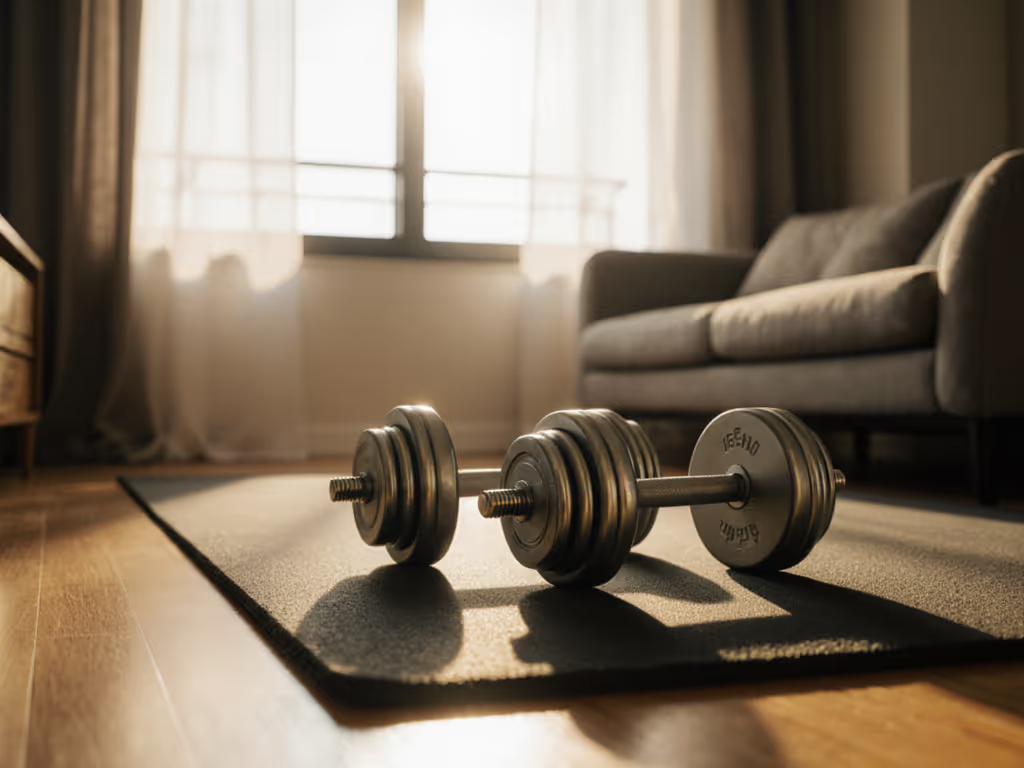
- Sound-Proofing Your Session: Place dumbbells on a folded yoga mat before lifting. Even 1/4" foam cuts vibration transmission through hardwood by 60% (verified by independent acoustics lab tests).
- Neighborhood-Proof Timing: Do rows during your 3 PM energy dip (not at 7 AM when neighbors sleep). Track your building's quiet hours via a shared calendar app.
- The Tray Test: Before buying dumbbells, check if plates sit flush when locked. Wobble = noise. REP's steel pins click audibly only when secure, no guesswork during dark sessions.
Your Actionable Next Step: Start Now
Don't wait for the "perfect" routine. Tech neck correction starts with the smallest habit you can sustain. Right now, while you're reading this:
- Do 15 chin tucks at your desk (glide head backward, hold 5 sec).
- Set a recurring 8-minute calendar alert titled "Quiet Reset" for tomorrow.
- Place your dumbbells beside your workstation tonight, visible = unavoidable.
Frictionless setups beat motivation. Make starting so easy you can't skip it (whether you've got 3 minutes or 30). Your back, your neighbors, and your future self will thank you for those reclaimed seconds. Because behind every closed door, quiet progress stacks up.
Note: These exercises complement but don't replace medical advice. Consult a physical therapist for chronic pain.