Dumbbell Sleep Training: Evening Routines
By Lila Menon • 10th May
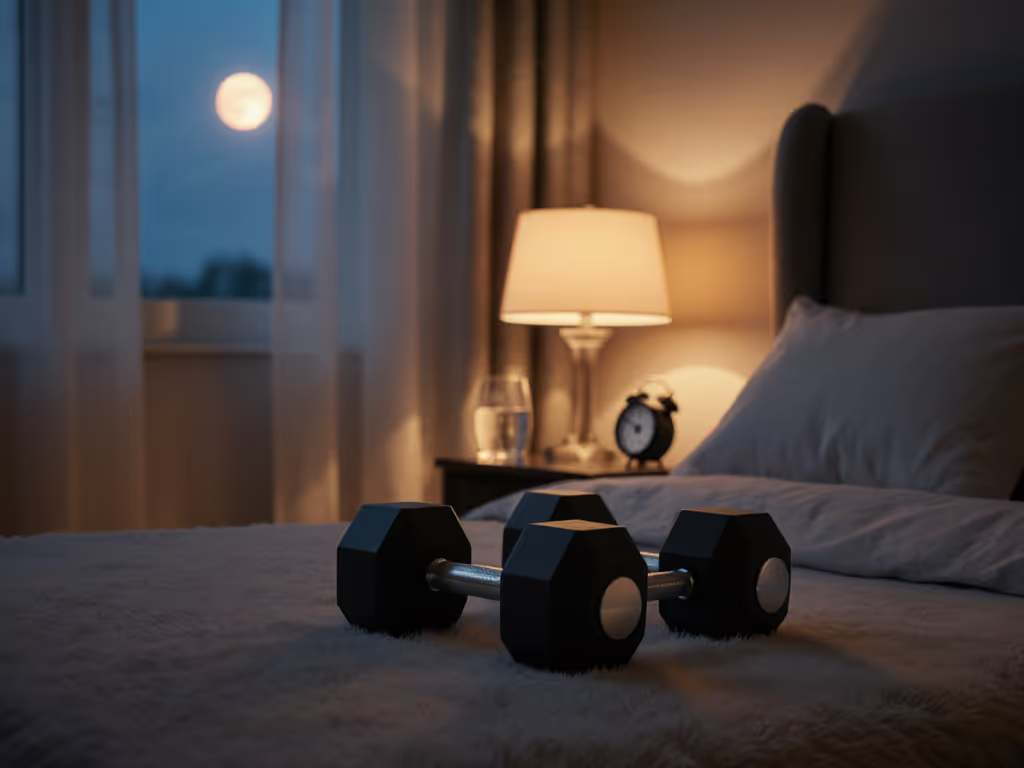
Can You Build Strength Before Bed?
When most people hear dumbbell sleep training and evening recovery routines, they imagine something sedating (foam rolling and passive stretching). But the truth is more layered. Evening strength training exists in a specific physiological window, one that demands precision, respect for your nervous system, and a sharp understanding of how handle geometry and movement quality influence not just your gains, but your ability to rest afterward.
Yes, you can build genuine strength in the evening. To structure evening progress without overstimulation, see our guide to progressive overload with adjustable dumbbells. But the how changes everything. Your grip, your handle diameter, the stability of your lockup, and the cues you carry into each rep determine whether evening work settles your system or leaves it wired at 11 PM.
What Does Circadian Rhythm Strength Training Actually Look Like?
Your circadian rhythm isn't just about sleep-wake cycles. Cortisol peaks in the early morning, testosterone shows secondary surges in the late afternoon, and melatonin begins rising 2-3 hours before bedtime. Circadian rhythm strength training fits best in that 90-minute to 2-hour window after work but well before sleep (typically 4:00 PM to 6:30 PM, depending on your sleep schedule).
This means matching intensity and tempo to your system's evening state. Research in exercise physiology confirms that training during off-peak cortisol hours can support recovery if volume and load are managed conservatively. You're not chasing maximal effort or workout density. Instead, you're building strength through controlled movement and technical precision, which also leaves your nervous system calm rather than flooded with stress hormones.
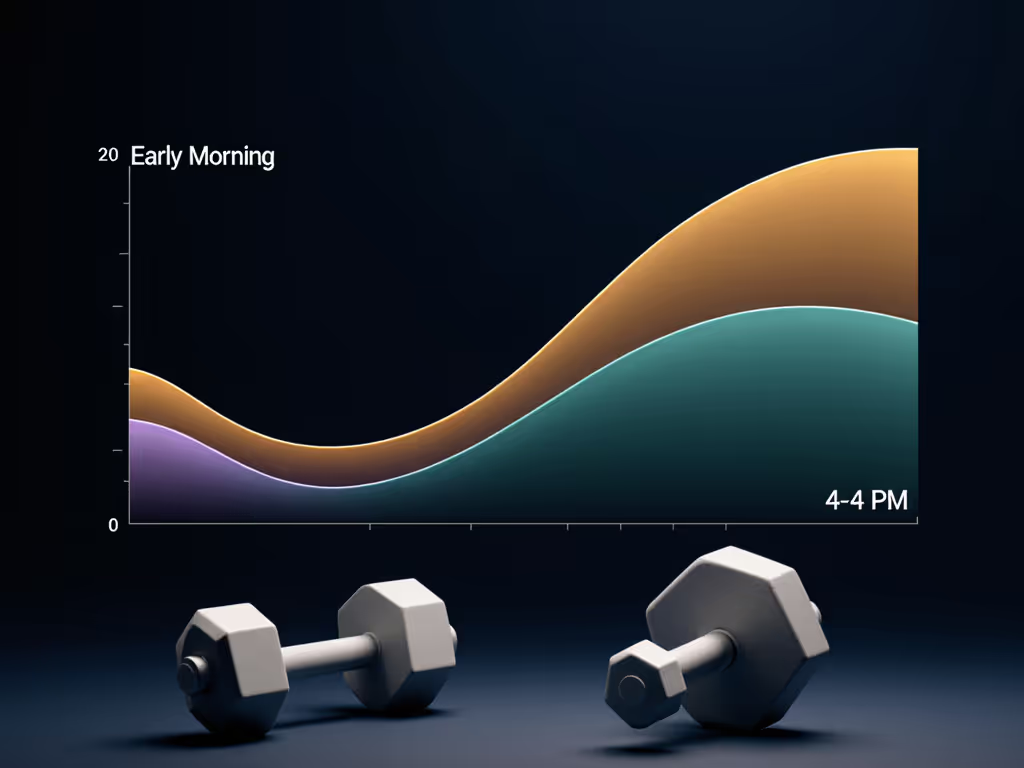
The mechanism works this way: moderate loads (60-75% estimated 1RM), moderate rep ranges (8-12 reps per set), and deliberate rest (90-120 seconds between sets) activate motor units without triggering the sympathetic surge that kills sleep quality later. Your body exits the session elevated but not wired (a state that supports recovery rather than sabotaging it).
Why Does Grip Quality Matter More in the Evening?
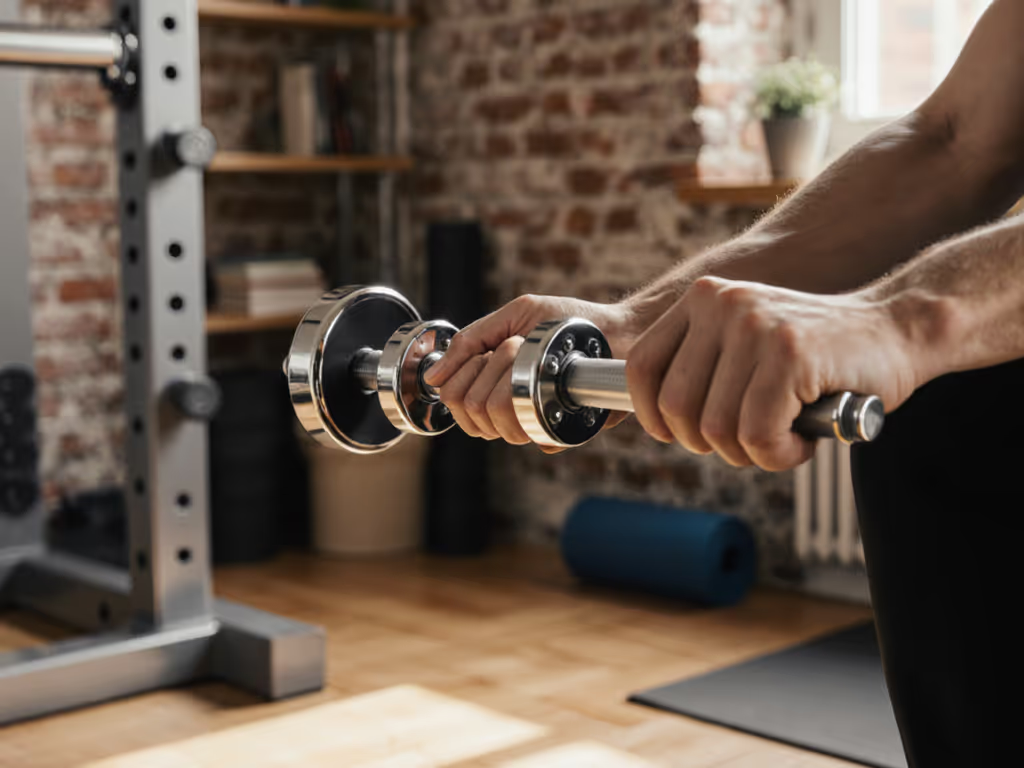
Here's where handle geometry enters. Your grip during evening work must be gentle but confident. A thinner handle forces your forearm flexors to work harder (useful during peak-cortisol morning sessions), but in the evening it elevates resting tension and can carry into sleep.
I learned this the hard way. A stubborn elbow flare would appear whenever I trained with handles that rattled or had thin, sharp knurling. The micro-instability meant my nervous system stayed on guard, even at lighter loads. I started filming my wrists and measuring diameters. The moment I switched to slightly thicker, well-cut knurling (48-52 mm handle diameter instead of the common 45 mm), grip tension softened. The sounds from my corner barely reached my partner in the other room. That week reframed everything: comfort that keeps you consistent is performance in disguise.
For evening work, prioritize handles with moderate knurl depth (0.8-1.2 mm rather than aggressive 1.5+ mm) and diameter in the 50-52 mm range. This reduces active grip effort and allows you to feel the load in your working muscles rather than your forearm. A precisely calibrated handle isn't luxury; it's load management made tangible.
How Do Parasympathetic Activation Exercises Work Alongside Dumbbells?
Parasympathetic activation exercises aren't separate from strength training; they're embedded in it. The parasympathetic nervous system governs rest and digest. Activating it during evening work means:
- Tempo control: 2-second lowering phases, 1-second pauses at the bottom. This invokes the stretch reflex gently and signals safety to your nervous system.
- Breathing cues: Inhale during the eccentric (lowering) phase, exhale smoothly during the concentric (lifting) phase. This rhythm alone reduces core tension and signals calm.
- Load selection: Staying well short of failure means no Valsalva maneuvers or strain faces. Your nervous system reads these as threat signals.
- Rep quality over density: Moving fewer total reps with flawless cues quiets your brain more than chasing high volume.
Research confirms that deliberate eccentric training (the lowering phase) activates parasympathetic tone more readily than fast, explosive work. In the evening, become a student of the descent. For exact pacing prescriptions that calm the nervous system, use our tempo training guide.
What Relaxing Strength Protocols Actually Look Like
A practical relaxing strength protocol for evening work might resemble this:
Warm-up (5-7 min): Light mobility and 1-2 submaximal sets of each movement
Main Work (25-35 min):
- 3 × 8 Dumbbell Bench Press (60-70% estimated max, 2-sec lowering, 90-sec rest)
- 3 × 10 Single-Arm Rows per side (controlled tempo, unilateral balance work reduces spinal compression anxiety)
- 2 × 12 Neutral-Grip Dumbbell Curls (lighter, higher reps, shoulder-friendly joint angles)
Finish (5 min): Wrist mobilization, breathing anchoring (box breathing: 4-in, 4-hold, 4-out, 4-hold) For breath-led strength sessions, explore dumbbell breathing workouts.
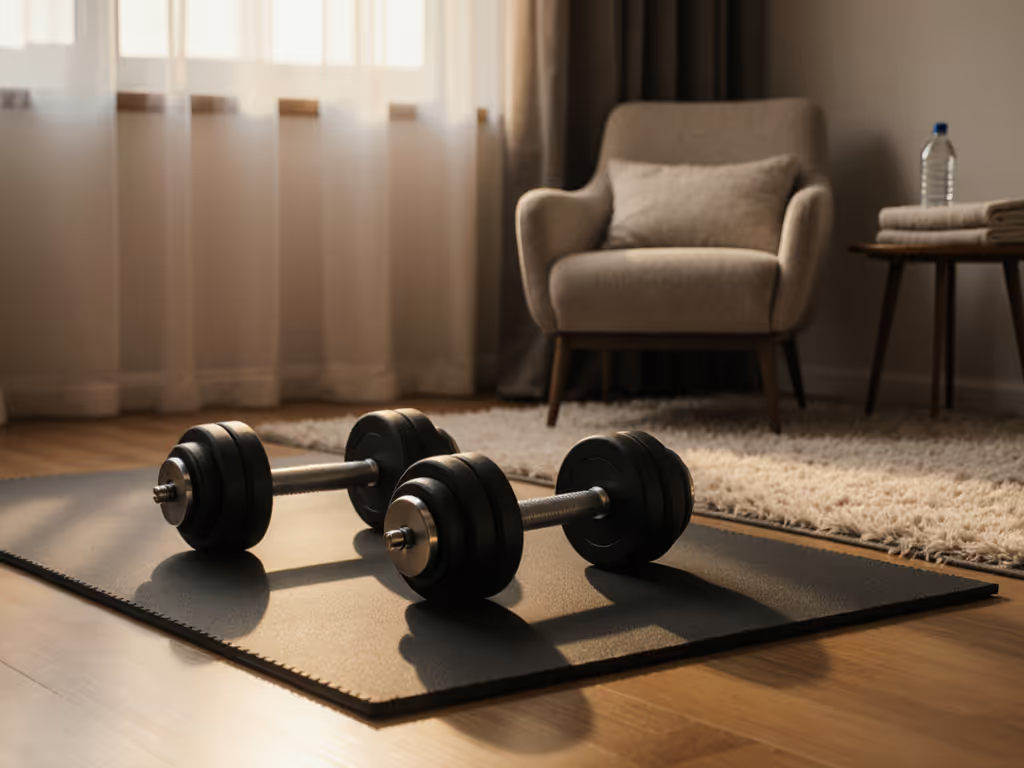
The total session clocks 35-45 minutes. Load is moderate. Noise is minimal; controlled tempos and proper handle security eliminate rattles. Your nervous system exits elevated but not wired. This is a joint-first framework: protect your shoulders, wrists, and spine, and everything else follows.
How Do Nighttime Movement Patterns Differ from Morning Training?
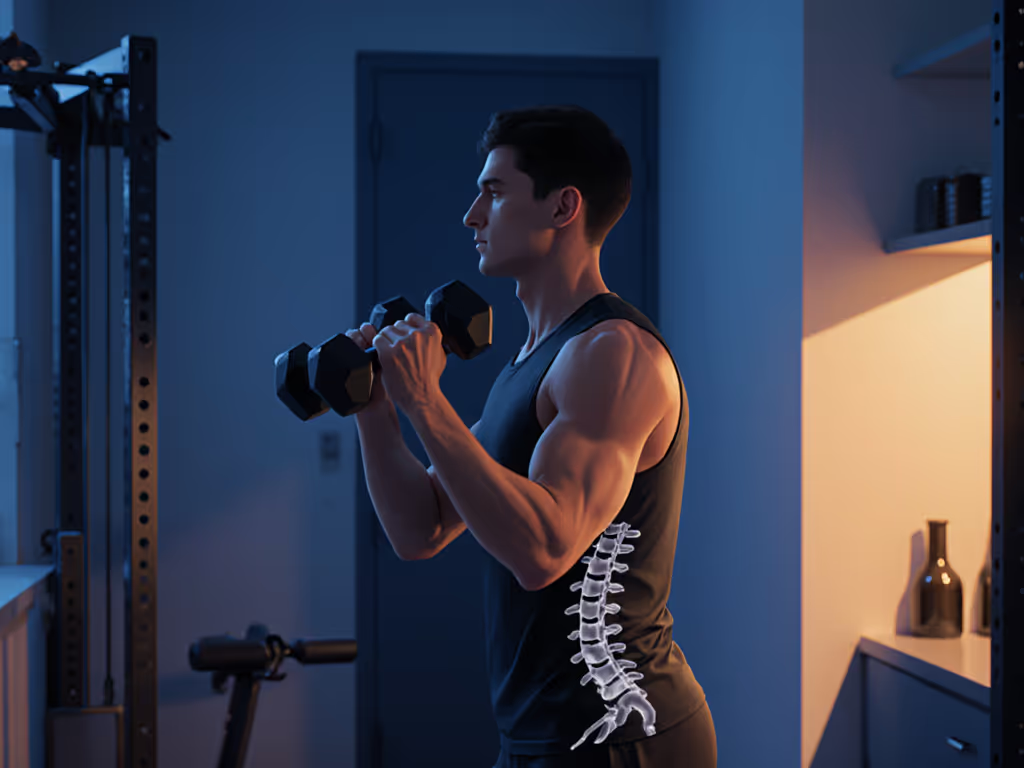
Nighttime movement patterns prioritize stability and proprioceptive feedback over speed. Your central nervous system is naturally more cautious in the evening; melatonin shifts cognitive load toward internal sensing rather than external performance.
This means:
- Bilateral and unilateral movements that demand balance and coordination (single-arm rows, half-kneeling presses) feel calming rather than stressful.
- Open-chain work (curls, lateral raises) is preferable to closed-chain under heavy load (back squats) because you're not fighting gravity and spinal compression stress.
- Joint-first positioning (neutral spine, shoulder-safe angles, wrist-aligned grip) eliminates the nagging pain signals that would keep you awake.
Movement quality and handle stability become non-negotiable. A wobbly lockup or insecure plate collar triggers protective muscle tension. A well-balanced dumbbell with a precise, comfortable knurl? That signals safety. Your nervous system settles.
Will Evening Dumbbell Training Hurt My Sleep?
Not if it's designed correctly. The concern isn't strength training itself: it's how it's delivered. If you train 1-2 hours before sleep, keep intensity moderate (RPE 6-7 out of 10), and avoid maximal effort, your sleep architecture remains intact. A recent sports science analysis noted that resistance training 3-4 hours before bed improved sleep quality compared to no training, provided volume and load stayed conservative.
Evening training can even anchor your sleep routine. To make that habit stick, apply these consistency strategies for home dumbbell training. The familiar cues (a specific set of weights, a consistent time, the same quiet corner of your home) become a parasympathetic signal. Your body learns.
Related Articles