
Dumbbell Training for Brain Health: Evidence-Based Protocols
By Amara Ncube • 19th Feb
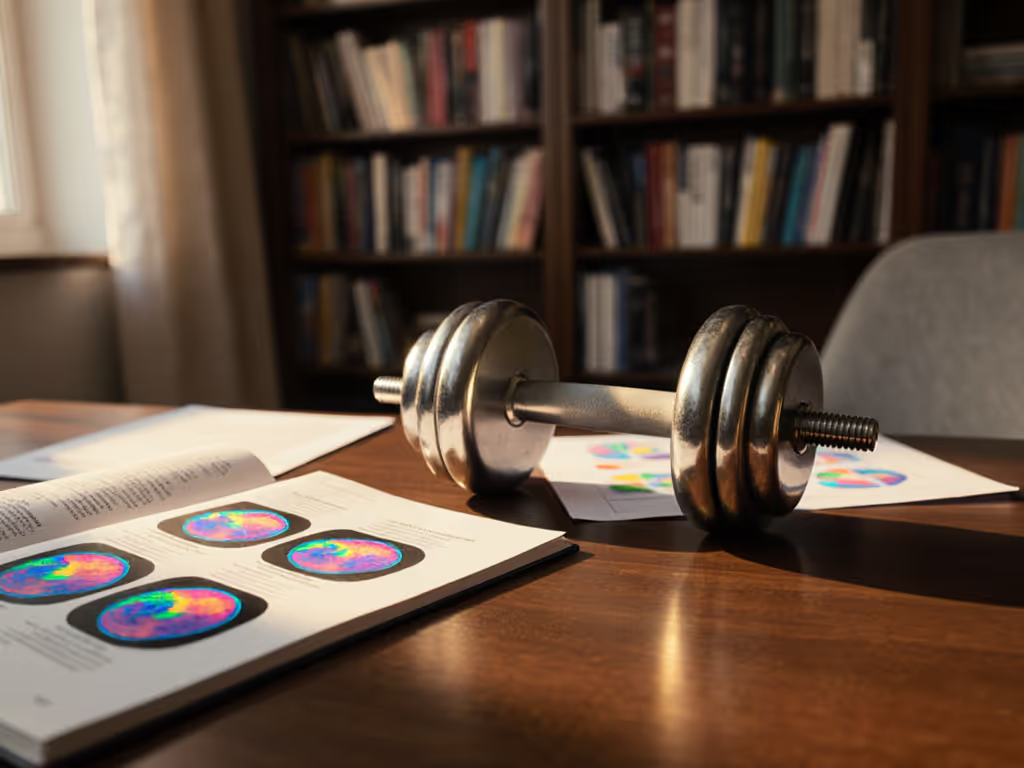
Cognitive health dumbbell training isn't just about lifting; it's about how resistance work rewires your brain through measurable changes in blood flow, oxygen delivery, and neural plasticity. The evidence is direct: strength training brain benefits persist when you follow a protocol (not chase trends), and the improvements in memory, processing speed, and attention span compound over weeks, not months.
How Dumbbells Activate the Brain
Resistance training triggers what researchers call hemodynamic response: blood flow surges to your frontal cortex and parietal lobe during lifting, regions critical for motor control and executive function.[1] This isn't passive. When you perform dumbbell exercise, your brain demands oxygen and glucose to coordinate movement, stabilize weight, and manage effort, and that demand is the stimulus for change.
The mechanism runs deeper. Resistance work upregulates brain-derived neurotrophic factor (BDNF), a protein that promotes synaptic plasticity, neurogenesis, and cell survival.[2] Translation: your brain literally rewires and builds resilience. This happens whether you're 30 or 70, though the benefit is particularly pronounced in aging populations at risk for cognitive decline.
But not all dumbbell protocols trigger the same response. Research comparing conventional dumbbell exercise to momentum-based (dynamic) approaches reveals a critical distinction. Momentum dumbbell exercise (which demands greater neuromuscular coordination and sustained focus) produces higher oxygenated hemoglobin concentration in the frontal and parietal regions than conventional lifting.[1] The anterior and posterior deltoids activate more intensely. The forearm stabilizers fire harder. Your brain works more because the task is less automatic.
This finding matters pragmatically: volume alone doesn't equal efficacy. Technique complexity and intentional movement drive greater cerebral activation than simple, familiar lifts.
The Comparative Case: Conventional vs. Coordinated Protocols
Two training frameworks emerge from the evidence:
Conventional dumbbell training improves cognitive function reliably, and orientation, language, visuospatial ability, attention, and short-term memory all show gains after 12 weeks.[2] It works because resistance training increases blood flow and oxygen supply to the brain. For time-constrained lifters, this baseline protocol is efficient: load a moderate weight, perform compound movements (rows, presses, curls), and the cognitive dividend is real.
Dynamic or coordinated protocols (those emphasizing control, stability, and novel motor patterns) push harder on brain activation. Research suggests that when strength training combines with simultaneous cognitive tasks (for example, calculating reps while performing a press, or alternating complex movements in rapid succession), the gains in executive function and attention exceed strength training alone.[2] The brain adapts to demand. Complexity is a stimulus.
This doesn't mean you need to spin dumbbells or invent exotic movements. It means: vary your angles, demand stability, and treat movement as a skill, not just a load transfer. A seated shoulder press followed immediately by a farmer's carry to the opposite corner of your space (transitions that require spatial awareness) activates more neural real estate than pressing the same weight from a fixed bench five times.
For apartment dwellers and space-conscious lifters, this efficiency is everything. You get more brain benefit per set without adding volume or equipment.
Effective Protocols: Frequency, Duration, and Structure
The dose-response relationship is clear. A meta-analysis confirmed that low doses of strength training, approximately 3 sessions of 40 minutes per week, produced significant cognitive improvements in apparently healthy older adults.[2] Extending that window to 2-3 sessions of 20-60 minutes weekly, depending on intensity, aligns with both cognitive and physical outcomes.[2][7]
The practical protocol:
- Frequency: 2-3 sessions per week, with at least one rest day between sessions for neural recovery and adaptation.
- Duration: 20-45 minutes of active work (excluding warm-up and cool-down). Shorter, denser sessions often outperform longer, lower-intensity efforts for cognitive gains.
- Intensity: Moderate to moderately high, weights that challenge you for 6-12 reps. Research shows cognitive benefits emerge after just 12 weeks at this level.[5]
- Structure: Compound movements (rows, presses, deadlifts, farmer's carries) that demand core stability and neuromuscular coordination generate more hemodynamic response than isolated curls.
- Cognitive overlay (optional but potent): Pair strength work with mental demand. Count reps in a foreign language. Alternate movement patterns without resting. Change your rep tempo mid set. These aren't gimmicks; they amplify brain activation measurably.[2]
For someone training in a small apartment at 6 a.m., this translates to three 30-minute sessions of dumbbell work (three compound movements per session, 3 sets each, moderate weight, minimal transitions). This will move the needle on memory and attention span faster than sporadic, longer workouts. Consistency beats volume.
The Tradeoff Calculus: Noise, Durability, and True Progress
Here's where pragma meets brain science. Every dollar should buy quiet, durability, and real progress. I learned this sharing a ceiling with a cafe downstairs; I tracked prices, repairs, and noise, then chose a simple spinlock set with rubber washers over flashier options. It saved money, cut evening decibel spikes, and fit under the bed. Value is quiet, durable, and invisible.
When selecting dumbbells for home use, the cognitive protocol matters to your choice. If you're performing high-frequency, complex movements (dynamic patterns, rapid transitions between exercises), you need:
- Fast weight changes (under 5 seconds per transition) so you stay in the aerobic/neural stimulation zone. Dumbbells that require unscrewing spinlocks or sliding multiple plates break that rhythm.
- Quiet, secure loading so you don't disturb neighbors or lose focus. Clanking weights fragment attention (the opposite of what you're training for).
- Durable, replaceable parts because you'll use them three times weekly for months. Plastic adjustment mechanisms fail. Simple steel spinlocks last a decade.
- Progression-friendly increments (ideally 2.5-5 lb jumps) so you can make small, consistent gains without plateauing. Large jumps stall adaptation.
These demands shape total cost of ownership: the initial price, repair frequency, and the value of uninterrupted training over 3-5 years. A cheap adjustable set that jams after three months costs more than a simple fixed-weight pair built to last.
The cognitive payoff depends on consistency. Friction (noise anxiety, slow changes, instability) erodes it. Choose equipment that disappears (gear so reliable and quiet you forget it's there) and focus on the work.
The Evidence Bridge: From Blood Flow to Measurable Gains
The pathway is documented. Resistance training increases cerebral blood flow and oxygen delivery to the frontal and parietal regions.[1][2] This drives upregulation of BDNF and synaptic plasticity.[2] Over 12 weeks, changes in brain structure and function manifest as measurable improvements: faster processing speed, better attention under distraction, sharper short-term memory, and stronger executive control.[2][6]
The gains persist. People who engaged in structured cognitive training (not the same as strength training, but parallel evidence) in the 1990s showed lower dementia diagnosis rates decades later, a fact confirmed by recent epidemiological research.[3] While direct longitudinal data on dumbbell training and decades-long dementia prevention are limited, the mechanistic case is strong: anything that builds neuroplasticity, increases BDNF, and enhances cerebral blood flow (which resistance training does) mitigates cognitive decline.
For the 24-45 demographic living in space-constrained homes and training early morning or late evening, this research justifies the investment. You're not just building muscle. You're building cognitive resilience, processing speed, and memory durability. The protocol is modest: 2-3 sessions, 30-45 minutes, three compound dumbbell movements, moderate weight, intentional transitions. The payoff compounds.
Next Steps: Design Your Protocol
Start by auditing your current setup. If you're training with dumbbells, assess: Can you change weight in under 5 seconds? Is the noise acceptable to your household? Do you have enough increments to progress steadily? Can you perform three compound movements (for example, rows, presses, carry variations) with minimal gear?
If the answer to most is yes, your hardware is fine. Tweak the protocol: shift to 2-3 sessions weekly, add a deliberate cognitive layer (count reps backward, alternate tempos, vary rest intervals), and measure outcomes (memory, focus during work, reaction time) every 4 weeks.
If friction exists (noise complaints, slow transitions, unstable locks), audit your total cost of ownership. Research alternatives that prioritize durability and speed, even if the initial cost is higher. Three years of quiet, fast training beats one year of cheap gear and neighbor complaints.
The brain science is settled. Dumbbells work. The variable is your consistency, and it depends on removing obstacles between you and the dumbbells.