
Respiratory Dumbbell Training: Build Diaphragmatic Strength
By Viktor Ionescu • 12th Apr
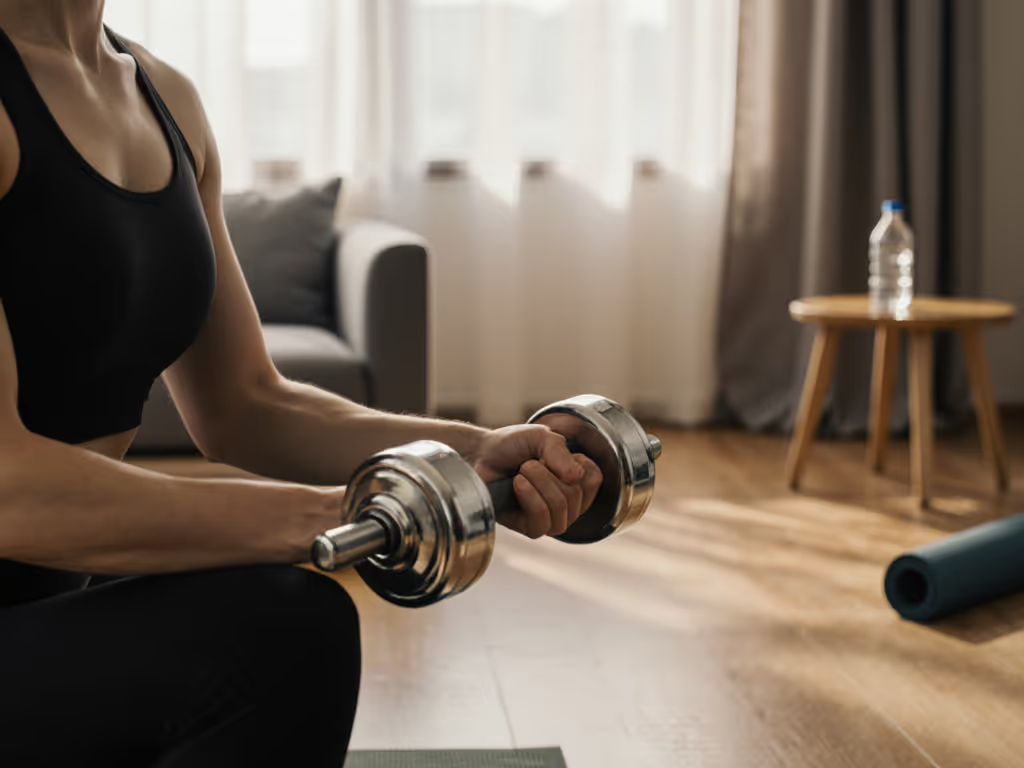
Respiratory training with dumbbells and diaphragmatic strength protocols aren't trends, they're foundational work that directly impacts your capacity to sustain hard sets, recover between reps, and train consistently without fatigue hijacking your form. If you're serious about progressive overload in a small space, breathing strength matters as much as the weight you're moving.
Why Respiratory Training Gets Overlooked
Most lifters think "breathing" is automatic, something you don't train. But your diaphragm, intercostals, and supporting core muscles are skeletal muscles. They respond to stimulus, adaptation, and progressive load, just like your legs. When these muscles fatigue first, your CNS can't stabilize under heavy weight, your pace drops on conditioning work, and your neighbors hear every nervous breath (which, in a shared living space, becomes its own problem).
When I moved from a detached garage to a condo, I realized that noise wasn't just about dropping dumbbells. It was about breathing patterns under load. Ragged, shallow breathing forces you to brace harder, shift weight, and create micro-instability (the exact thing that causes rattle and vibration in tight lockup mechanisms and propagates through floor joists). Dialing in respiratory strength transformed not just my capacity to train hard, but the feel and stability under load, which meant fewer apologies to the unit below.
FAQ: Core Questions About Respiratory Strength Training
What Exactly Is Diaphragmatic Strength, and Why Does It Matter?
Your diaphragm is a dome-shaped muscle beneath your rib cage that drives inhalation. When you contract it, your abdominal contents move down, your belly expands, and negative pressure fills your lungs (true "belly breathing" or diaphragmatic breathing). Most untrained people rely on shallow, chest-dominant breathing, which recruits your accessory muscles (scalenes, sternocleidomastoid) and exhausts them quickly.
Diaphragmatic strength means you can generate high intra-abdominal pressure (IAP), brace your core effectively, and sustain that pressure through a full set without your breathing becoming the limiting factor. Research in athletic populations confirms this: strengthened inspiratory muscles improve oxygen uptake efficiency, lower resting heart rate, and extend time to fatigue on high-intensity work, all measurable outcomes.[1][2]
For apartment dwellers and small-space trainers, this translates to fewer repositioning shifts mid-set, which means less vibration, cleaner reps, and quieter sessions.
How Does Weighted Breathing Training Differ From Standard Breathing Cues?
Standard breathing cues ("brace on the descent, exhale on the drive") are load-management tactics. They're essential, but they don't strengthen your respiratory muscles. Weighted breathing exercises apply resistance to the breathing act itself, forcing your diaphragm and intercostal muscles to work harder against opposition. This is analogous to doing chest presses instead of just reminding yourself to keep your chest up.
Weighted breathing devices, for example, add mechanical resistance to inhalation or exhalation (or both). When you inhale against resistance, you're essentially doing a set of controlled reps with your diaphragm. Over weeks, this builds muscular endurance and pressure-generation capacity. The result is a quieter, more efficient breath during heavy lifts: less air hunger, fewer repositioning cues, and better brace stability.
Can You Really Improve Lung Capacity With Dumbbells?
Yes, but with precision. Lung capacity is partly genetic (determined by rib cage size and diaphragm excursion), but functional lung capacity (the volume of air you can move and use efficiently) is trainable. Weighted breathing work targets diaphragmatic mobility and strength, which allows deeper, more controlled breathing patterns and better oxygen extraction at rest and under load.
In pulmonary rehabilitation settings, light dumbbell work combined with structured breathing patterns has been documented to enhance ventilation efficiency and reduce breathlessness during daily activities.[4] The mechanism isn't growing new alveoli; it's teaching your respiratory muscles to work smarter and generating better intra-thoracic pressure dynamics. For targeted drill ideas, see our dumbbell breathing workouts guide.
For a lifter in a small space, this means you can sustain higher intensity without feeling oxygen-deprived, and your breathing stays rhythmic, no sudden gasps or chest heaving that make neighbors aware of your 3 AM leg day.
How Do You Integrate Respiratory Muscle Endurance Into a Real Training Program?
This is where program-first thinking applies. Respiratory strength isn't a standalone modality; it's a supporting system that amplifies your main lift work.
Direct respiratory work sits in a warm-up or dedicated finisher slot, 2-4 times per week:
- Choose one breathing modality per session: inhalation-focused, exhalation-focused, or mixed.
- Perform 3-4 sets of 10-30 second holds or controlled reps, depending on resistance level.
- Rest 60-90 seconds between sets to avoid dizziness.
- Progress by adding resistance or extending duration, not by rushing reps. Learn how double progression makes these increases smoother and safer.
Integrated breathing cues during main lifts reinforce the pattern:
- On compound movements, use structured breathing (exhale on drive, inhale on eccentric).
- Between sets, perform 3-5 deep diaphragmatic breaths (belly out, no chest movement) to reset your nervous system and prime stability for the next set.
This dual approach ensures your respiratory muscles aren't isolated; they're conditioned to support your actual lifting output. Feel under load tells the truth when charts look similar, and subjectively, lifters report that respiratory conditioning removes a layer of fatigue anxiety and sharpens their focus across sets.
What's the Relationship Between Core Breathing Integration and Spinal Stability?
Your "core" isn't just abs. It's an integrated system: diaphragm, abdominal wall, pelvic floor, and multifidus. When your diaphragm is weak or dysfunctional, your abdominal wall works overtime, your lower back destabilizes, and your brace feels sloppy. In tight spaces with minimal equipment clearance, sloppy bracing turns into subtle shifts, which, with adjustable dumbbells or any rack system, can cause creep, rattle, or worse, unsafe positions. Review our adjustable dumbbell safety guide to reduce risk while you build better breathing.
Strong diaphragmatic breathing creates a more efficient pressure gradient. Your abdominal wall doesn't have to strain as hard to maintain IAP, your spinal extensors stay neutral, and your overall stability improves. This is especially crucial for single-arm work (rows, presses) in a condo where you're working on a mat. Stability under load matters because any tipping or shifting translates through the floor.
Data from strength coaching and physical therapy research shows that lifters with trained respiratory mechanics demonstrate better squat depth, more consistent barbell path, and lower asymmetry markers on unilateral movements.[1] The breathing isn't the star; it's the foundational lighting that lets the main lifts shine.
Building Your Respiratory Strength Protocol
Phase 1: Movement Quality (Weeks 1-2)
Start with unloaded diaphragmatic breathing. Lie on your back, hand on belly, and practice slow inhalation (4 seconds) and exhalation (4 seconds). Your belly should rise on the inhale; your ribs should stay relatively quiet. Perform 5 rounds of 10 reps, three times per week. This resets your nervous system and establishes baseline motor control. No load, no complications.
Phase 2: Light Resistance (Weeks 3-4)
Introduce minimal resistance: a light dumbbell (2-5 lb) held horizontally across your chest or a light band around your rib cage. Breathe against this resistance, again using a 4-4 tempo. Perform 3 sets of 15 reps. The goal is rhythm, not intensity. Stability under load begins here: the weight should feel anchored, not bouncy.
Phase 3: Progressive Load and Duration (Weeks 5-12)
As comfort increases, add resistance or extend your breath holds to 6-8 seconds per breath. Work up to 3-4 sets of 30-second holds (roughly 8-10 breaths per hold) against modest resistance. Progression is gradual; jumping weight too fast causes strain and defeats the purpose.
Finisher Integration
Once you're comfortable, add 2-3 minutes of structured breathing work at the end of your main session (after strength, before you pack up). This primes recovery, cements the neural pattern during fatigue, and keeps the practice consistent without adding volume stress.
Actionable Next Steps
Start this week: Dedicate three mornings to 5 minutes of unloaded diaphragmatic breathing on your back. Establish a baseline, feel the motor control difference, and confirm you can sustain the pattern without chest dominance. This is the foundation.
After one week of consistency, introduce one light dumbbell (or household object with similar weight and balance) into your breathing holds. Perform 3 sets of 15 reps during your warm-up, resting 60 seconds between sets. Log the resistance level and any subjective notes on breathing quality. This becomes your baseline for progression.
Over the next 4 weeks, increase either the resistance or the duration of your holds by small increments. If you add 2 lb, keep the duration at 30 seconds; if you extend to 40 seconds, hold the weight constant. Never jump both variables at once.
Pay attention to how your main lifts feel during weeks 3-4. You'll likely notice your brace tightens earlier in the set, your positions stay more neutral, and your energy feels distributed rather than panicked. That's the signal that your respiratory system is supporting your strength work, and that stability under load is returning compound returns on a simple investment.
After 8-12 weeks, reassess: Can you sustain 30-second holds at 10-15 lb without gasping? Can you complete a heavy set and recover breathing rhythm in 60 seconds instead of 90? These markers confirm adaptation. From here, maintaining 2-3 sessions per week of respiratory work keeps the gains while your main program evolves.