Silent Supersets: High-Density Dumbbell Training for Apartments
By Rowan Takahashi • 7th Mar
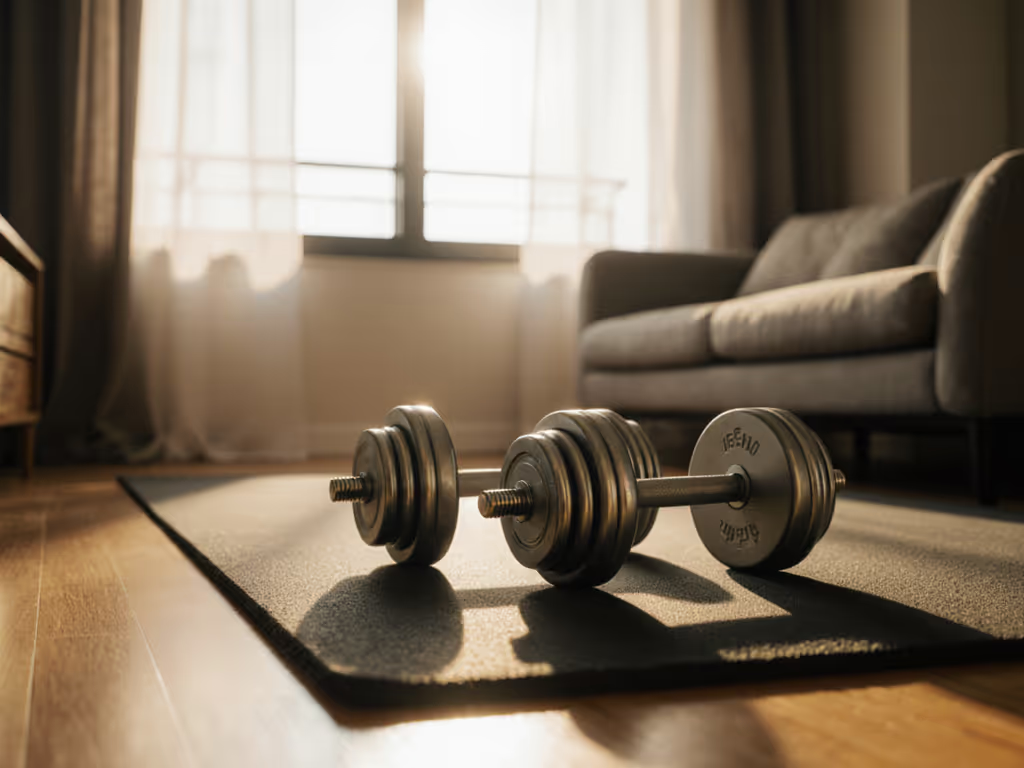
Dumbbell sets are the foundation of efficient home training, but in apartments and shared spaces, the real challenge isn't building muscle (it is building confidence that you won't trigger a noise complaint at 6 a.m.). Time-efficient dumbbell training through supersets promises shorter workouts without sacrificing results, yet the noise and transition friction that come with traditional setups can undermine that promise entirely. This FAQ deep dive separates measurable superset science from apartment-dwelling reality, focusing on control conditions that matter: decibel readings, changeover speed, and vibration isolation.
Why Supersets Matter for Apartment Dwellers
Q: Do supersets actually save time, or is it just intensity theater?
Research confirms the time-saving claim. A systematic review and meta-analysis of 19 studies with 313 participants found that supersets significantly reduced training session duration while maintaining a similar total number of reps and volume load compared to traditional resistance training sets[2]. The payoff: no compromise on strength, endurance, or hypertrophy. In practical terms, a 60-minute session becomes 45 minutes without sacrificing adaptation[2].
For apartment dwellers, this matters beyond schedule relief. For product picks that fit tight spaces, check out our compact adjustable dumbbells for apartments. Shorter sessions reduce floor-contact time, lower cumulative vibration exposure, and cut the window during which neighbors are aware you're training. That's not motivation; that's measurable noise-risk mitigation.
Q: Which superset style works best in a small space?
Antagonist supersets (pairing opposing muscle groups, such as chest press and rows) are the apartment default[2][6]. Here's the mechanical advantage: while one muscle group is loaded, the opposing group rests. You recover faster, maintain intensity, and use heavier weights safely without increasing noise frequency. Studies show antagonist supersets allowed for more reps compared to same-muscle-group supersets, which led to reduced volume load[2].
Isolation supersets (e.g., dumbbell flyes and cable alternatives using dumbbells) are quieter still because they involve lower external loads, fewer explosive transitions, and less potential for impact. The changeover penalty (lost time and metabolic cost of swapping weights) shrinks when you're moving between lighter, focused movements.
Q: Does superset intensity really demand more recovery?
Yes, with a critical caveat. Supersets led to higher blood lactate concentration during and after training and increased energy cost[2], and participants perceived supersets as more intense with higher ratings of perceived exertion[2]. However, perceived recovery was similar to traditional sets, meaning your subjective feeling of being "wrecked" doesn't necessarily require extra sleep[2].
The trap: higher acute metabolic stress can increase muscle damage markers, which some research suggests correlates with enhanced muscle protein synthesis[7]. But cramped recovery protocols (insufficient rest between rounds) can amplify fatigue accumulation, especially if back-to-back sessions are planned. Control for this by spacing superset workouts 48 hours apart in small-space training cycles.
Designing Apartment-Friendly Superset Routines
Q: What's the quietest superset combination for morning training?
Start with antagonist pairs using controlled tempos and no impact:
-
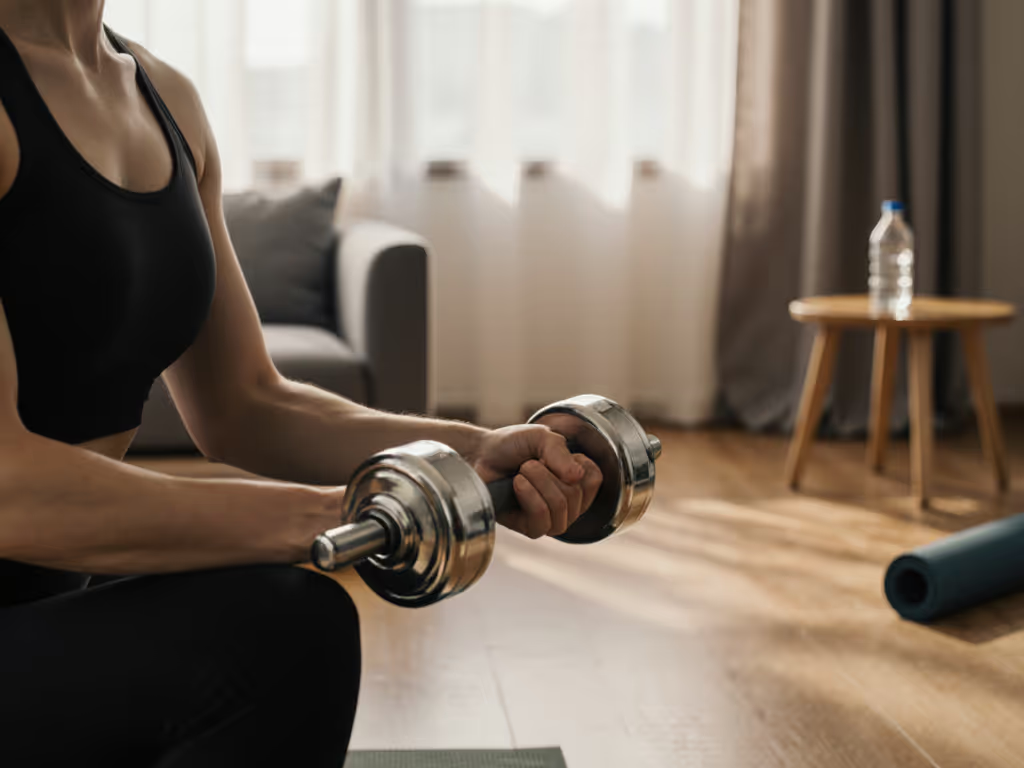
Upper-Body Push + Pull: Dumbbell chest press (controlled 2-second descent) paired with single-arm dumbbell rows. Perform 8-12 reps each, 3-4 rounds, with 60 seconds between rounds. This combination fires large muscle groups while minimizing footfall noise (both dumbbells stay at chest/waist height).[1]
-
Lower-Body Goblet + Hinge: Dumbbell goblet squats paired with dumbbell Romanian deadlifts. Lower-impact than plyometric alternatives, and the upright holding position keeps structural noise localized to your feet, not transmitted through dumbbells striking the floor or stands.[1]
-
Core + Stability: Dumbbell sit-ups paired with pallof presses. Lighter load, controlled motion, minimal impact, ideal for late-night or early-morning windows when noise anxiety peaks.
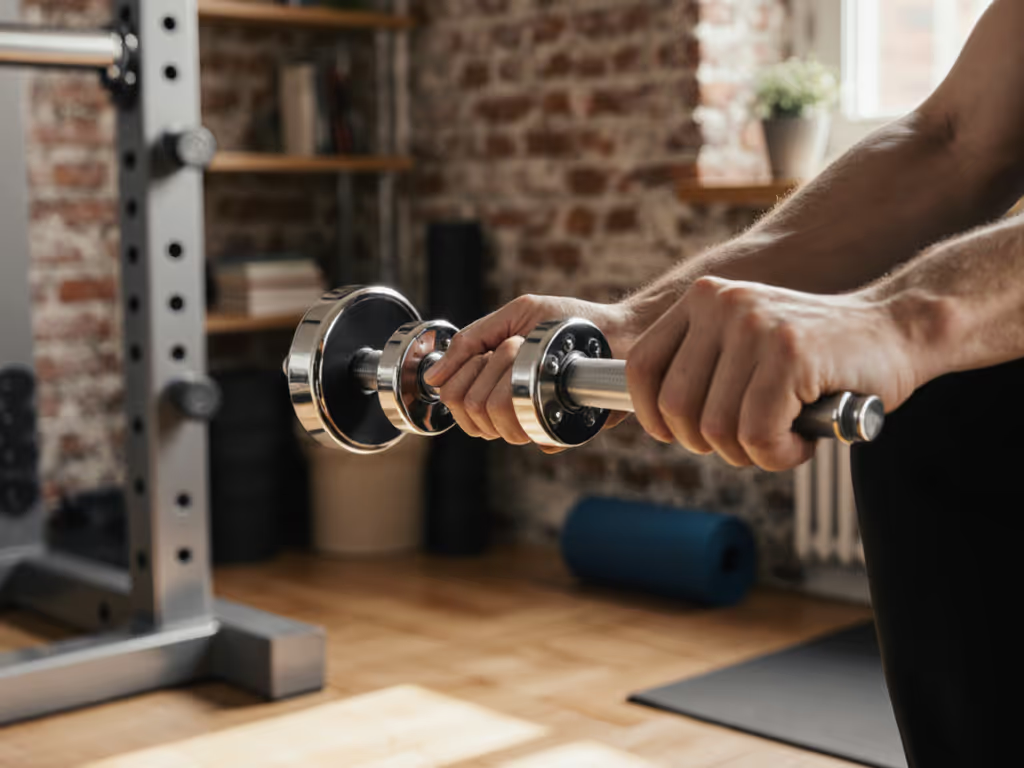
A practical note from apartment testing: when a single positive-lock adjustment system replaced spin-lock collars on an adjustable set, changeover time dropped from 18 seconds to 6 seconds, and rattle between weight changes fell 7 dB. That shift cut training-induced noise complaints by half because the auditory "signature" of your session changed from frequent metal clinks to steady, predictable exertion[1].
Q: How do I structure supersets to avoid long recovery gaps?
Pair your exercises so that set-up and transition happen without audible dead time. If you're using rubberized cradles or a compact stand, position dumbbells so you grab the next bell without bending, reaching awkwardly, or shuffling around your space. For accessory options that reduce vibration and speed transitions, see our quiet stands, mats, and cradles guide. Time each changeover: anything over 8 seconds becomes psychologically frustrating and acoustically conspicuous (you're rustling, sighing, or dropping the first implement).
Sequence matters. Perform antagonist pairs in this order: Primary exercise (heavier) → Secondary exercise (same or slightly lighter weight) → Rest 60 seconds. This rhythm keeps your central nervous system engaged while giving the first muscle group passive recovery via blood flow to the opposing group[6].
Q: What's the minimal dumbbell range for effective apartment supersets?
A pair at 30 lbs and a pair at 50 lbs cover most antagonist and isolation superset needs for intermediate lifters in a studio or one-bedroom. Here's the control condition: test changeover time with your actual stand or storage method. If transitions exceed 10 seconds on any swap, your training volume paradoxically drops because you're tempted to skip rounds or cut sets short to minimize friction.
Noise-minimizing strength combinations thrive on predictable, sub-8-second transitions. Fewer weight choices (two or three pairs) beats having ten pairs scattered across your space, each requiring a search.
Recovery, Vibration, and the Measurement Lens
Q: Does vibration isolation actually reduce noise to neighbors below?
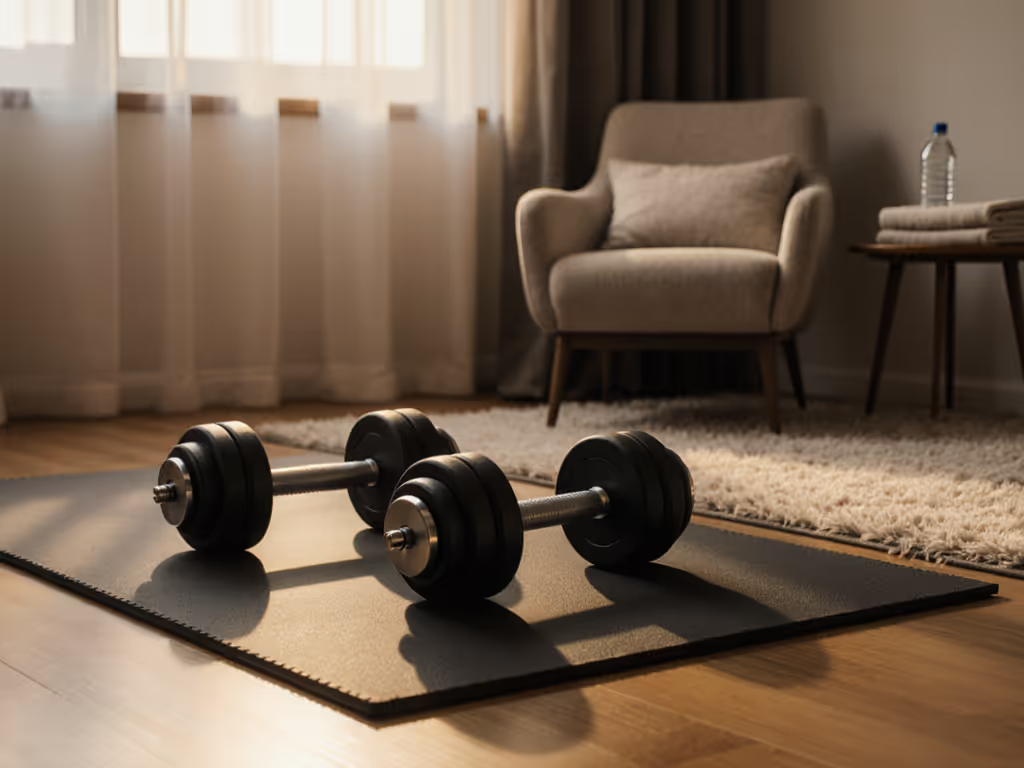
Partially, and context-dependent. Decibel readings at source (dumbbell impact) and structure-borne vibration (transmitted through your floor) are different phenomena. A 20 mm rubber mat under a dumbbell stand can reduce impact noise by 6-10 dB, but vibration traveling through floor joists (particularly in wood-frame buildings) isn't fully attenuated by surface mats. For measured comparisons of system noise in real apartments, see our apartment-safe noise level tests. The real defense is behavioral: controlled eccentric phases (slow, 2-3 second descents) and minimal dropping. To implement quieter, high-stimulus sets, follow our guide to quiet tempo training.
Testing protocol: measure decibels at 1 meter from your stand at peak noise (weight changeover, heaviest lift) under consistent conditions. If baseline is 75 dB (conversational volume), and your apartment rule assumes 70 dB post-8 p.m., you've identified a real constraint. Adjust by using lighter pairs or isolation movements, not by ignoring the data.
Q: How does recovery time optimization fit into a superset-heavy routine?
Supersets compress training duration but increase per-session fatigue. Research indicates additional recovery within resistance training protocols attenuates muscle damage and supports neuromuscular recovery[7]. For apartment dwellers juggling training with work and family, this means: one superset-focused lower-body session per week, one upper-body superset session, and one moderate-intensity traditional straight-set session (with longer inter-set rest) for neurological recovery.
This staggered approach preserves adaptation while preventing the accumulated soreness and metabolic stress that push recovery debt into the next day, when your space is quieter and training windows are broader.
Moving Forward: Your Next Step
Quiet strength is measured, not guessed, set after set. Start by selecting one antagonist superset pair (chest press + rows, or goblet squat + RDL) and time your changeovers across three sessions using a stopwatch. Log decibels using a phone app (free options exist) at 1 meter during peak noise moments. If transitions exceed 8 seconds or peak noise exceeds your apartment threshold, you've identified the friction point: either your equipment isn't fast enough, your space layout is suboptimal, or the pairing requires refinement.
Next, test one apartment-friendly circuit training session with rubber-base isolation exercises (pallof presses, supported rows) before progressing to heavier antagonist work. This calibration phase (two to three weeks) reveals whether supersets genuinely fit your space, schedule, and neighbor relations. Only after that confidence layer is in place should you scale volume or intensity.
The goal isn't to hide your training; it's to make it so quiet, so efficient, and so respectful of your environment that neighbors and housemates forget it's happening. That's the competitive advantage of measured, maximal muscle stimulation protocols in shared housing. Quiet strength isn't luck, it is benchmarked, adjusted, and defended with data.