Dumbbells Vs Resistance Bands: Noise-Free Home Strength Guide
By Amara Ncube • 2nd Dec
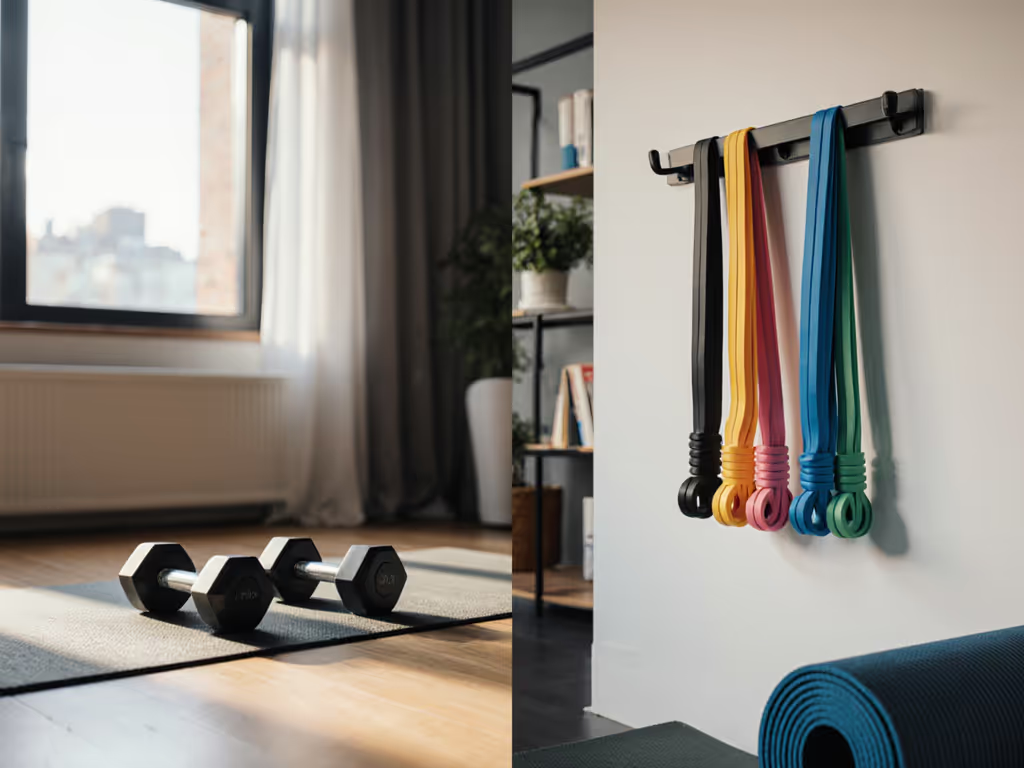
When your downstairs neighbor knocks after every set or your morning routine wakes your partner, you know it's time to reevaluate your home gym setup. The dumbbells vs resistance bands decision becomes far more than just about muscle growth (it's about peace of mind in your living space). After my stint sharing a ceiling with a cafe, where clanking dumbbells meant eviction threats, I've tested both options through the lens of equipment comparison for goals that prioritize quiet operation, space efficiency, and long-term durability. Let's cut through the marketing noise and examine which option truly serves your life, not just your workout.
Noise Considerations: The Silent Factor Nobody Talks About
Dumbbell Decibel Reality Check
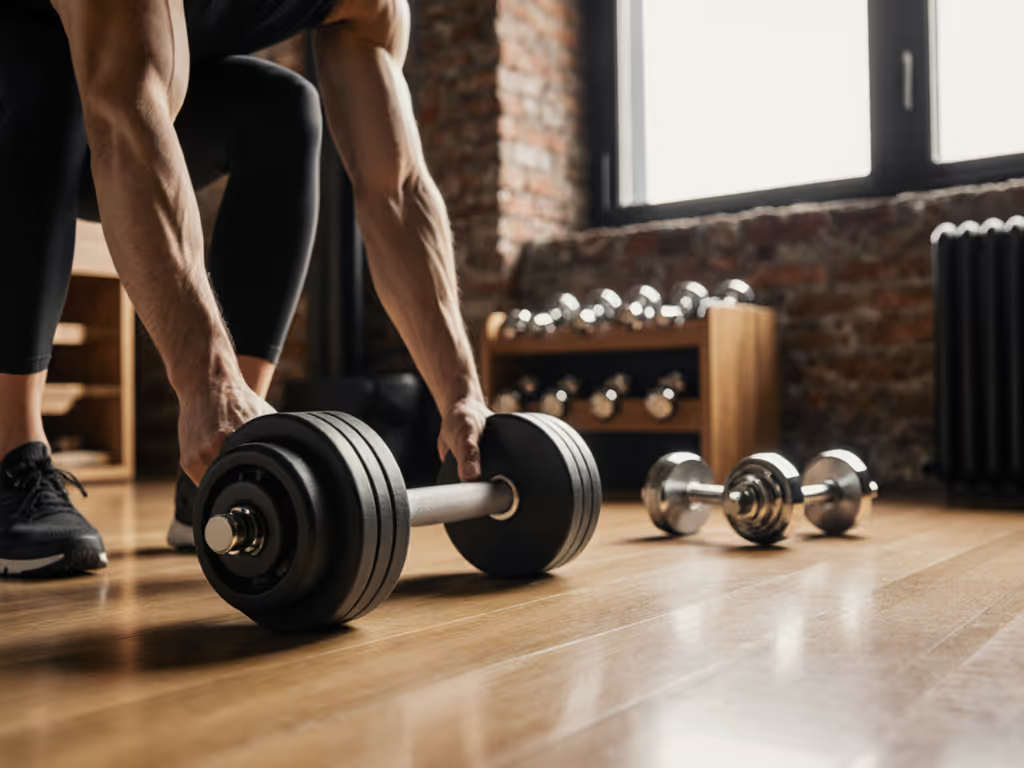
That satisfying 'clank' of metal plates may feel gym-like, but in reality, it's your neighbors' nightmare. Traditional dumbbells create three distinct noise sources:
- Impact noise (when placing weights down)
- Structure-borne vibration (transmitting through floors to units below)
- Rattling (loose plates or handles)
A basic 20-pound dumbbell set on hardwood flooring can exceed 75 dB when dropped from shoulder height, equivalent to a vacuum cleaner. Even gentle placement registers around 55 dB, enough to disrupt sleepers or video calls. For measured decibel data across popular models, see our apartment-safe noise comparison. Rubber-coated dumbbells help somewhat, but vibration still travels through solid surfaces. In my apartment experiment, I tracked how even minor placement noise triggered three neighbor complaints per month during evening workouts.
Resistance Band Quiet Operation
The near-silent nature of resistance bands solves the fundamental challenge of apartment living. Without metal contacting hard surfaces, bands operate at 30-40 dB during most exercises, quieter than normal conversation. This near-absolute silence means you can train:
- During baby's nap time
- At 6 AM without waking your roommate
- Late evening when neighbors would normally complain
The elastic nature of bands also eliminates structure-borne vibration entirely. While bands can make subtle snapping sounds when stretched to extreme limits, this remains well below the noise threshold that would disturb others through standard residential walls or floors.
Space Efficiency: Footprint vs. Functionality
Dumbbell Space Demands
A standard 50-pound dumbbell set occupies approximately 3.5 square feet of floor space. When you add a rack (which many users need to prevent noise from haphazard storage), you're looking at 5-6 square feet (nearly impossible in studios or micro-apartments). Even compact adjustable dumbbells require dedicated storage space that can't be easily tucked away during the day. If space is your top constraint, explore our compact adjustable dumbbells guide.
Band Minimalism That Disappears
A complete resistance band system with multiple resistance levels folds down to the size of a paperback book. I've successfully stored my bands in a nightstand drawer, under the bed, and even in a kitchen cabinet. The ultimate space-saver? Wall-mounted door anchors that disappear completely when not in use. When space is premium real estate, bands deliver tremendous progressive resistance options without claiming square footage.
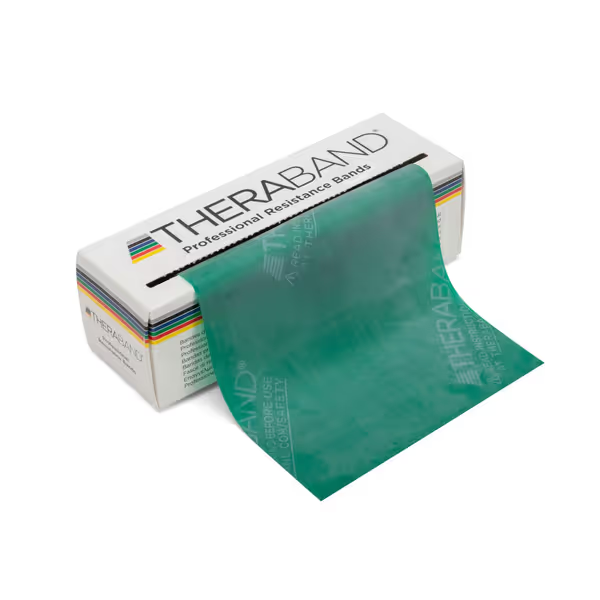
THERABAND Resistance Bands (Green, Heavy)
Progressive resistance for effective rehab, training & strengthening, anywhere.
$14.5
Resistance (100% Elongation)4.6 lbs
Resistance (100% Elongation)4.6 lbs
Pros
Versatile for full-body workouts & rehab.
Customizable length from 6-yard roll.
Color-coded progressive resistance system.
Cons
Some users report breakage during use.
Latex material may cause allergies.
Customers find these exercise bands to be well-made and effective for physical therapy and home workouts, particularly for leg and shoulder exercises. The bands offer customizable lengths and accurate resistance grading, allowing customers to double them up for increased resistance. While some customers report the bands are strong enough for leg-lift exercises, others mention they break during use.
Customers find these exercise bands to be well-made and effective for physical therapy and home workouts, particularly for leg and shoulder exercises. The bands offer customizable lengths and accurate resistance grading, allowing customers to double them up for increased resistance. While some customers report the bands are strong enough for leg-lift exercises, others mention they break during use.
Strength Development Comparison: Performance Without Disturbance
Muscle Activation Patterns: Weight vs. Bands
Research shows different muscle activation patterns between these modalities. EMG studies confirm dumbbells produce higher peak activation during compound movements like presses and squats due to their constant resistance. However, bands excel at end-range activation where most muscle growth occurs, particularly for rotational movements that mimic real-world functional strength.
The key insight for home users: bands' variable resistance creates unique strength curves that build functional power without requiring heavy weights that would disturb neighbors. Your lats, glutes, and shoulders develop strength through full ranges of motion without the thud of plates hitting the floor.
Progressive Overload Without Noise Penalty
The real challenge with dumbbells in apartments? Progressive overload creates noise. Every time you add weight, you increase the decibel impact when placing weights down. Bands avoid this entirely, you progress by changing bands or altering stance without increasing noise output.
Dumbbell users trying to microload often face awkward 5-10 pound jumps that stall progression. Learn how to make smoother jumps with our double progression method. With bands, you can precisely increase resistance through:
- Shortening grip width
- Stacking multiple bands
- Adjusting band tension points
This micro-adjustment capability supports smoother progression without the noise penalty of adding weight plates, a crucial factor for sustainable home training.
Practical Realities for Small Living Spaces
Rehabilitation Effectiveness Without Disturbance
Resistance bands shine for rehabilitation effectiveness in confined spaces. Physical therapists consistently recommend bands for joint recovery because they provide controlled resistance without excessive joint stress. The elastic nature creates smoother resistance than dumbbells' rigid weight, making bands ideal for:
- Prehabilitation exercises before main workouts
- Post-workout mobility routines
- Injury recovery protocols
You can perform shoulder rehab while your partner sleeps just feet away, no risk of waking them with clattering weights. This makes bands particularly valuable for those balancing recovery protocols with shared living spaces.
Durability and Long-Term Quiet Operation
While bands offer quiet operation initially, not all maintain their noise-free performance long-term. Cheap bands degrade quickly, developing uneven resistance and eventual snapping sounds as they wear. Premium latex bands (like the Theraband Professional line) maintain consistent tension and silence for years with proper care.
Dumbbells win on longevity, but their durability comes with noise tradeoffs. Even well-maintained dumbbells will always create noise upon placement. Unless you invest in specialized rubber matting ($200+), you'll never eliminate the fundamental noise issues inherent to metal weights. To keep your set quiet for years, follow our adjustable dumbbell maintenance guide.
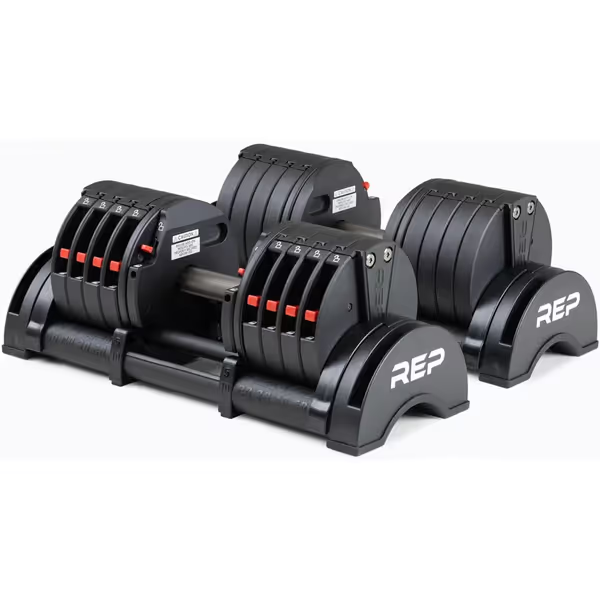
REP Fitness Quickdraw Adjustable Dumbbells
Quiet, durable, and space-saving for efficient home workouts.
$495.99
Weight Range5-50 lbs (2.5lb increments)
Weight Range5-50 lbs (2.5lb increments)
Pros
Rapid, quiet weight changes via steel switches.
Compact footprint ideal for small spaces.
Extreme durability with lifetime warranty.
Cons
Warranty excludes normal wear and tear.
Heavier sets may be bulky for some movements.
Customers find these adjustable dumbbells easy to use, with one noting how convenient it is to switch weights mid-workout. The dumbbells are praised for their solid construction, durability, and great feel, while offering a small footprint that makes them space-efficient. Customers consider them worth their price point and appreciate their quick adjustment capabilities.
Customers find these adjustable dumbbells easy to use, with one noting how convenient it is to switch weights mid-workout. The dumbbells are praised for their solid construction, durability, and great feel, while offering a small footprint that makes them space-efficient. Customers consider them worth their price point and appreciate their quick adjustment capabilities.
Every dollar should buy quiet, durability, and real progress. This principle guides my equipment recommendations, not just raw performance metrics.
Making Your Choice: Goals Meet Reality
Dumbbell Advantages for Home Gyms
Choose dumbbells if:
- You've mastered proper form with lighter resistance
- Your building has concrete floors (reducing vibration transmission)
- You can dedicate permanent storage space
- You prioritize maximum strength gains over noise concerns
- You're willing to invest in specialized flooring ($200-$400)
The REP Fitness Quickdraw system addresses many traditional dumbbell pain points with its smooth locking mechanism that eliminates rattle, and the ability to change weights without clanking plates. Their rubberized base significantly reduces placement noise compared to standard metal dumbbells.
Resistance Band Advantages for Small Spaces
Choose bands if:
- You live in a wood-framed building (where vibration travels easily)
- You train early morning or late evening
- Space is extremely limited
- You're rehabbing an injury or need joint-friendly resistance
- You value portability for travel or multi-room use
The Hybrid Approach
For many home gym users, the optimal solution blends both. For programming that combines bands and dumbbells effectively, see our hybrid resistance training protocol. Start with resistance bands for foundational strength, mobility work, and quiet rehabilitation. As you build proficiency, add a compact dumbbell set like the REP Quickdraw for heavier compound lifts during neighbor-friendly hours.
This tiered approach minimizes noise complaints while maximizing strength development. Your total cost of ownership decreases because you're strategically investing in equipment that serves specific purposes without duplication. It is a smart path for small spaces.
Final Verdict: Quiet Progress Wins
In my journey from apartment dweller to space efficiency specialist, I've learned that sustainable home training requires equipment that disappears into your life, not dominates it. While dumbbells provide superior constant resistance for maximal strength, they come with noise tradeoffs that often make them impractical for apartment living.
For most small-space residents, resistance bands deliver the quiet operation, space efficiency, and rehabilitation effectiveness needed for consistent progress without neighbor complaints. They represent the essence of what I value: gear that's quiet, durable, and invisible in use.
If your primary goal is building visible muscle mass with minimal noise concerns, then a compact adjustable dumbbell system becomes worth the investment. The REP Quickdraw system's noise-reducing design and micro-adjustment capabilities make it the quietest dumbbell option I've tested for home use.
Further Exploration
Still weighing your options? Consider these quiet home gym experiments:
- Test your current floor's vibration transmission by placing a glass of water on the floor while jumping beside it
- Measure your existing equipment's noise with a free decibel meter app during typical workout movements
- Try a single resistance band workout before investing in a full set
Your ideal home gym exists at the intersection of your goals, your space constraints, and your neighbors' tolerance. When equipment works with your life instead of against it, you'll find yourself training more consistently, which ultimately delivers better results than any single piece of gear ever could.
Related Articles