Smart Dumbbell App Integration: Tested & Compared
By Viktor Ionescu • 4th Apr
Smart dumbbell app integration and digital workout tracking compatibility have evolved from novelty to necessity for serious home lifters. The difference between a siloed piece of equipment and a true fitness ecosystem isn't measured in flashy features, it's measured in whether your session data actually drives your next workout and whether the hardware feels stable enough to trust under load.
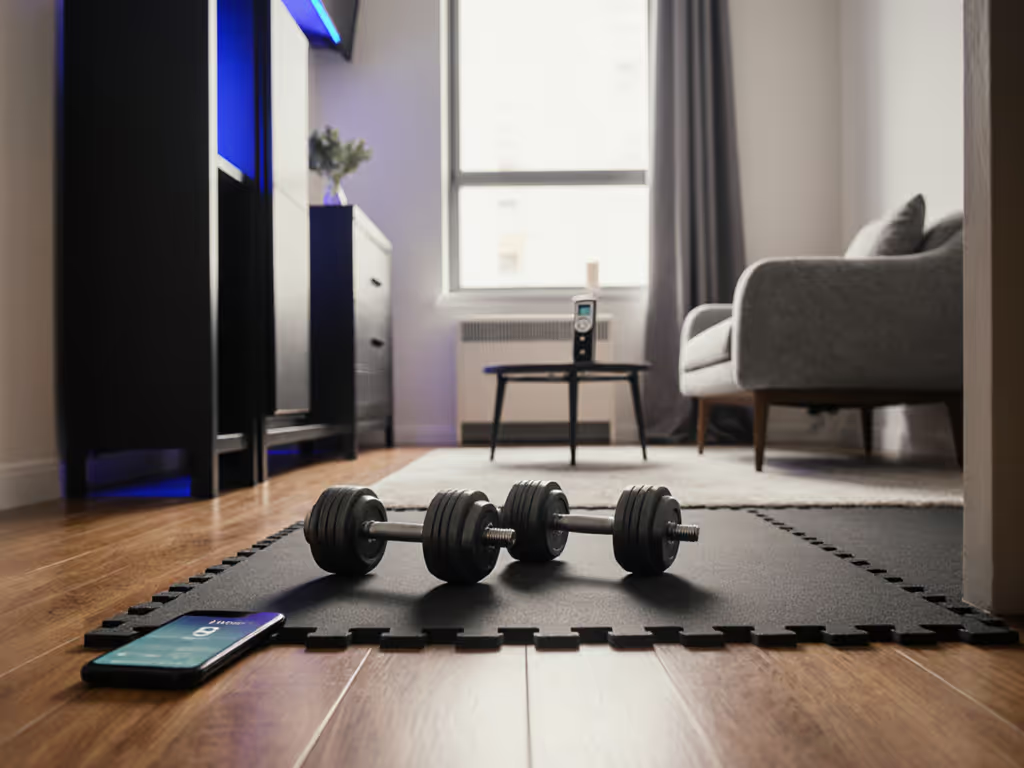
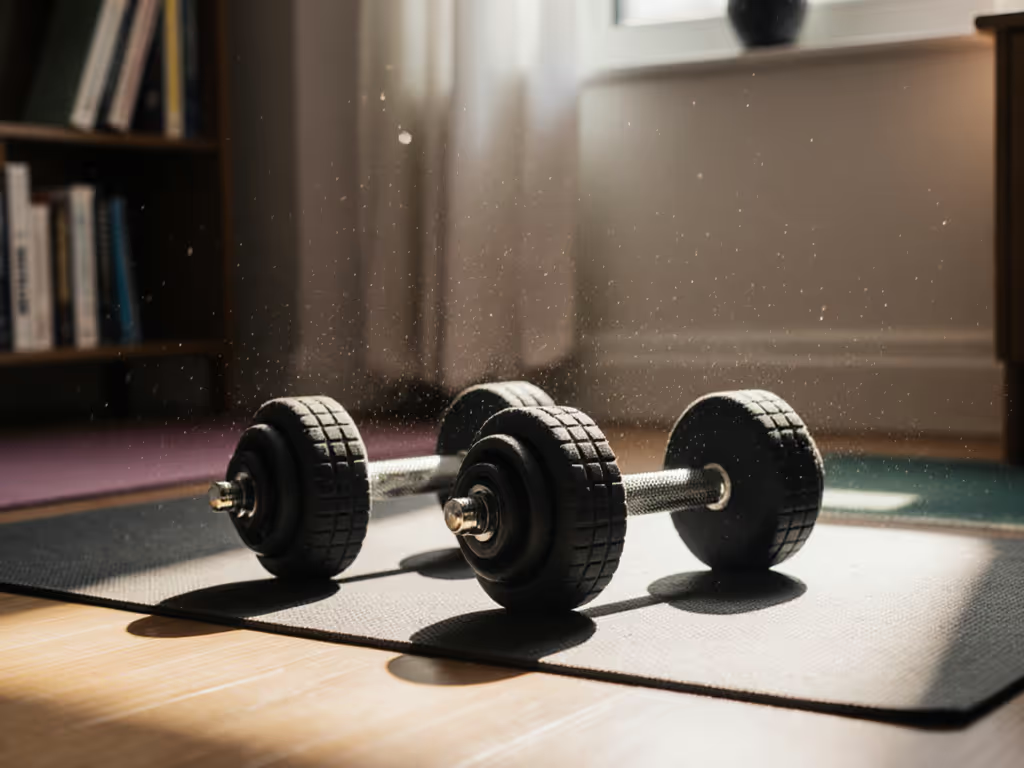
I learned this the hard way. When I moved from a garage to a high-rise, one set's sloppy handle lock sent vibrations through the floor that echoed downstairs; the clack of loose plates shattered my focus at RPE 9. Swapping to a tighter locking mechanism and damped cradle kept noise down and stability up. My PRs returned without apologies. That overlap (feel and quiet, hardware and software working in tandem) is where real training happens.
But how do you navigate the landscape of smart dumbbells, tracking apps, and ecosystem integration when the market now spans everything from camera-based rep counters to full Bluetooth ecosystems? Let's dig into what actually matters. For a deeper primer on the tech trade-offs, see our digital vs manual dumbbells comparison.
What Exactly is Smart Dumbbell App Integration?
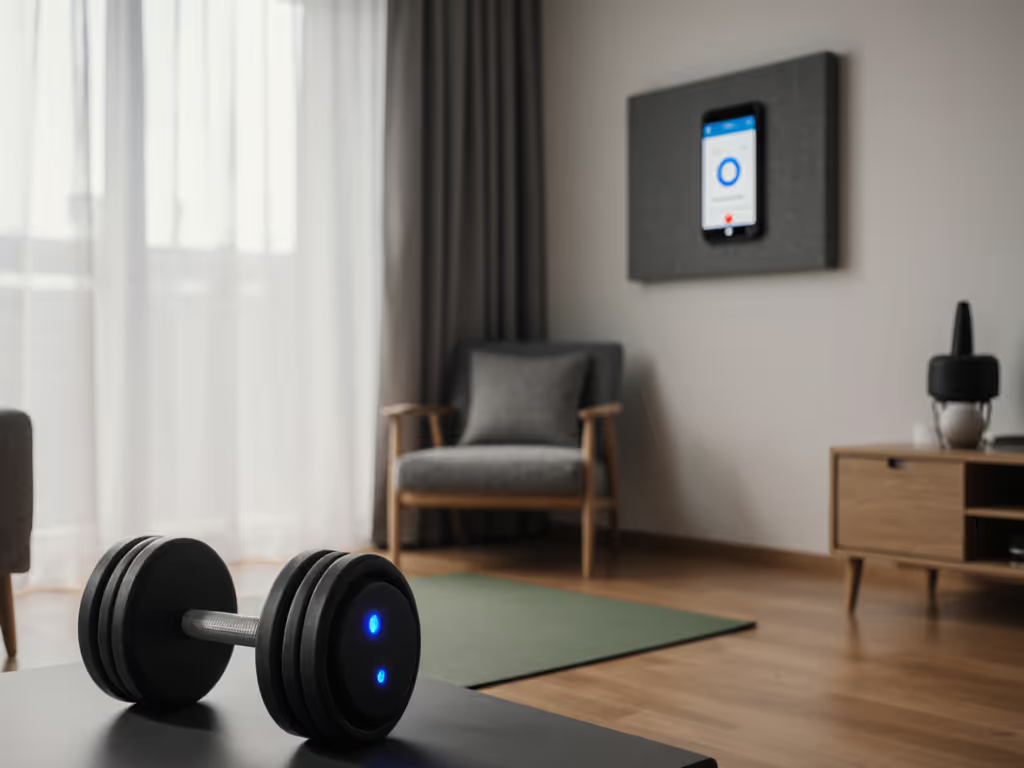
Smart dumbbell app integration connects your physical equipment to a digital platform via Bluetooth, camera, or motion sensors. The goal is real-time rep tracking, form analysis, workout logging, and adaptive programming, all feeding back into your training plan.
Unlike standalone apps that ask you to input data manually, integrated systems track automatically. Prefer low-tech? Use these evidence-based progress tracking methods that stay quiet and simple. You perform a set, the hardware logs it, the app records the data, and the algorithm adjusts your next session based on what it learned. For apartment dwellers managing multiple time constraints and training in tight quarters, this frictionless loop saves mental energy and keeps progression on rails.
The difference between integration and novelty: whether your hardware and app actually talk to each other in a way that changes your program.
Which Integration Method Works Best: Bluetooth, Camera, or Sensors?
Three dominant architectures exist in the current market.
Bluetooth-Based Tracking (e.g., SmartWeight Smart Dumbbells)
These embed motion sensors directly into the dumbbells. When you lift, accelerometers track reps, sets, and form in real-time. The data streams to the paired app via Bluetooth.[1] The advantage: zero setup friction beyond a one-time scan. You grab the weights and train; the hardware does the counting.
The trade-off: added cost, battery management, and a reliance on consistent sensor calibration. If the Bluetooth connection drops mid-set, you lose that data point. For condo-based lifters training at 6 a.m., a one-second disconnect feels like a minor irritation, until it costs you a logged PR.
Camera-Based Tracking (e.g., Dribbleup Smart Weights)
Your phone or tablet's camera becomes the rep counter. You scan the weight at the start of each set, and the app's computer vision tracks your range of motion and counts reps in real-time through video analysis.[4] The coach in the app guides you simultaneously.
Advantage: no sensors or Bluetooth needed, lower hardware cost, instant compatibility with any phone. Disadvantage: your phone or tablet must be positioned with a clear line of sight to your body throughout the set. For tight apartments with furniture blocking sightlines, or early-morning sessions where you're half-asleep and forget to position the camera, this introduces friction.
Sensor + Algorithm Hybrid (e.g., Fitbod)
You log your workouts manually or via a connected wearable, and the app's AI analyzes your past sessions to predict recovery, muscle fatigue, and your optimal next stimulus.[3] No hardware tracking; pure algorithmic intelligence. The app tells you which muscles recovered, which are still fatigued, and builds your session around that precision.
Advantage: works with any dumbbell set you already own; no added cost or hardware dependency. Disadvantage: you must manually input reps and weight, or sync data from a secondary device (smartwatch, Apple Health). For lifters seeking frictionless tracking, this reintroduces the data entry burden.
How Do These Systems Compare for Form Accuracy?
Form feedback is where the real split emerges. For platform-specific strengths and real coaching quality, check our smart dumbbell coaching comparison.
SmartWeight's motion sensors and Dribbleup's camera both claim real-time form analysis.[1][4] SmartWeight's app records your movements and provides instant feedback on technique and form through the paired app interface. Dribbleup's camera tracks your range of motion and the in-app coach calls out form cues during the set (verbal, audio-based feedback that adjusts as you fatigue).
For condo dwellers, this difference matters. Audio coaching (Dribbleup, or apps like Shred with voice guidance) keeps your eyes forward and your mind in the movement.[3] You're not distracted by your phone screen mid-set. The coach tells you when your rep depth is shallow or your tempo is sloppy.
However, here is what the marketing doesn't emphasize: form analysis from sensors or video is only as good as the app's algorithm. A motion sensor can't...
Related Articles